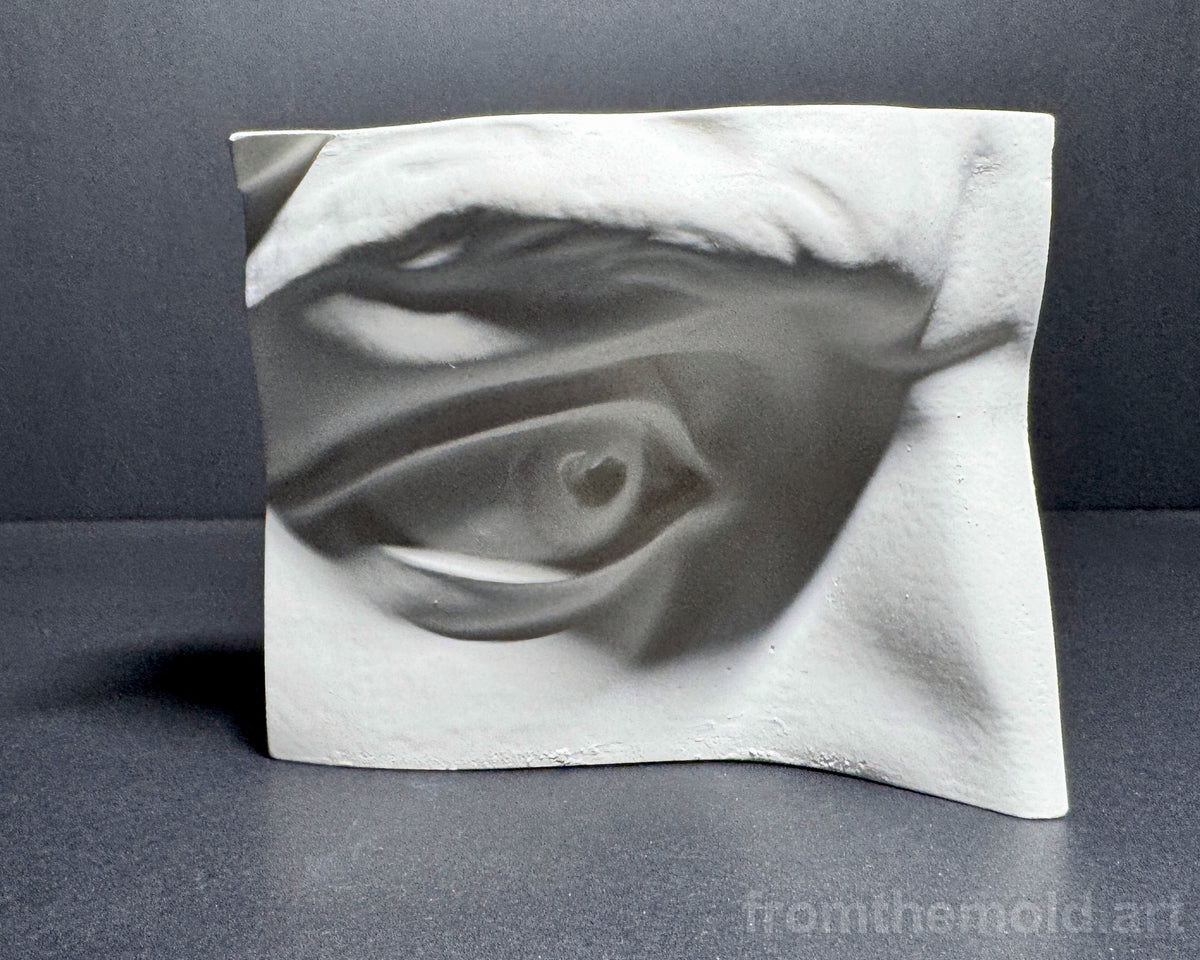
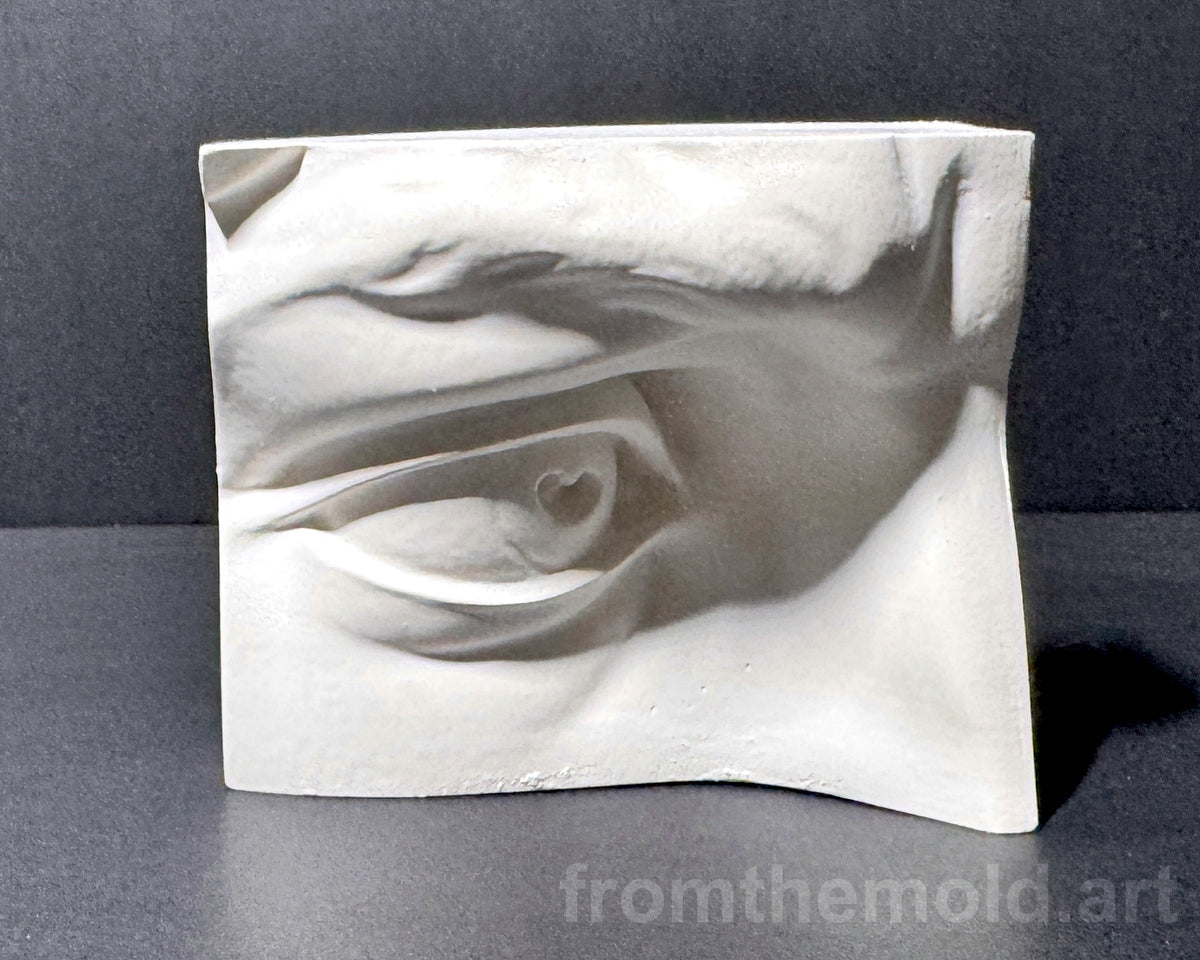
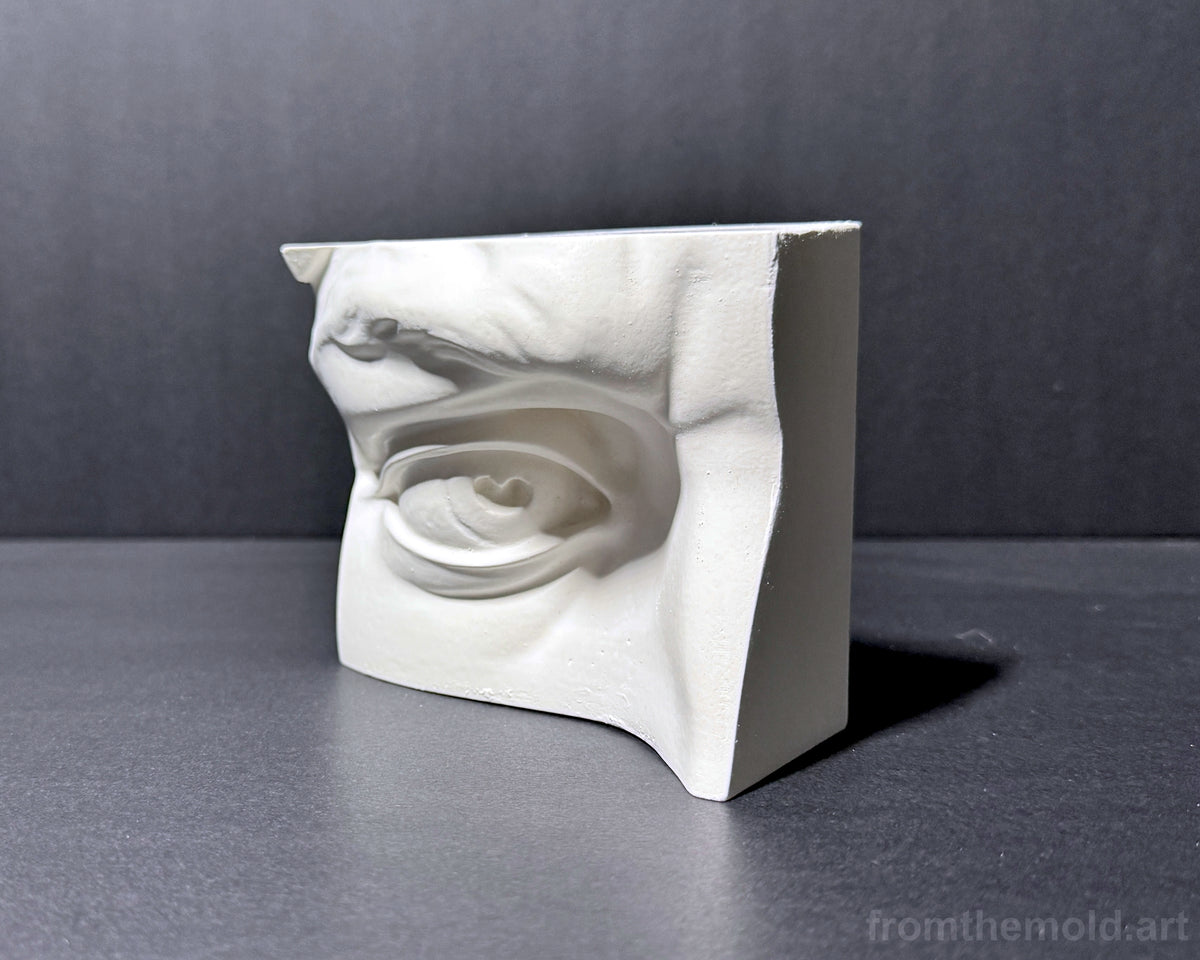
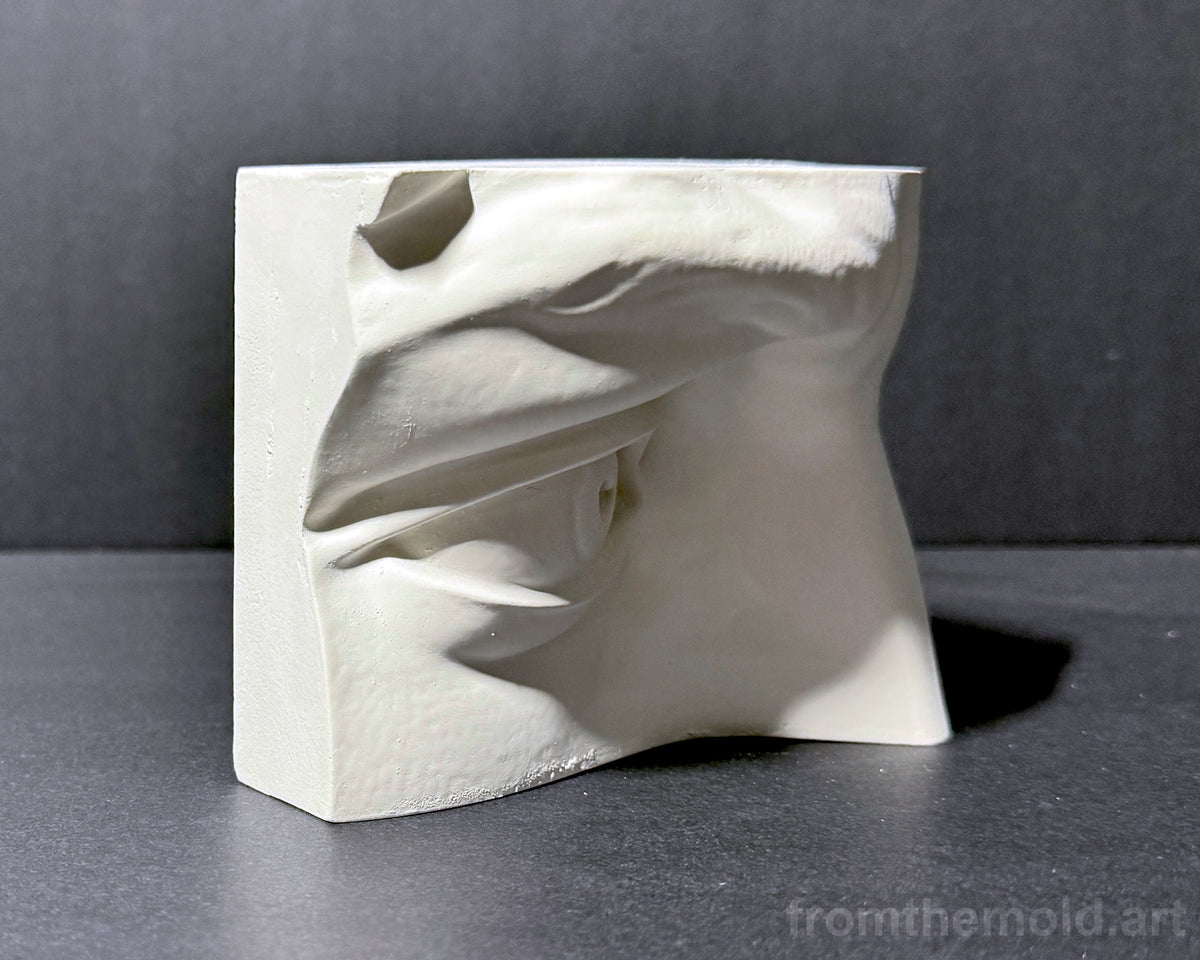
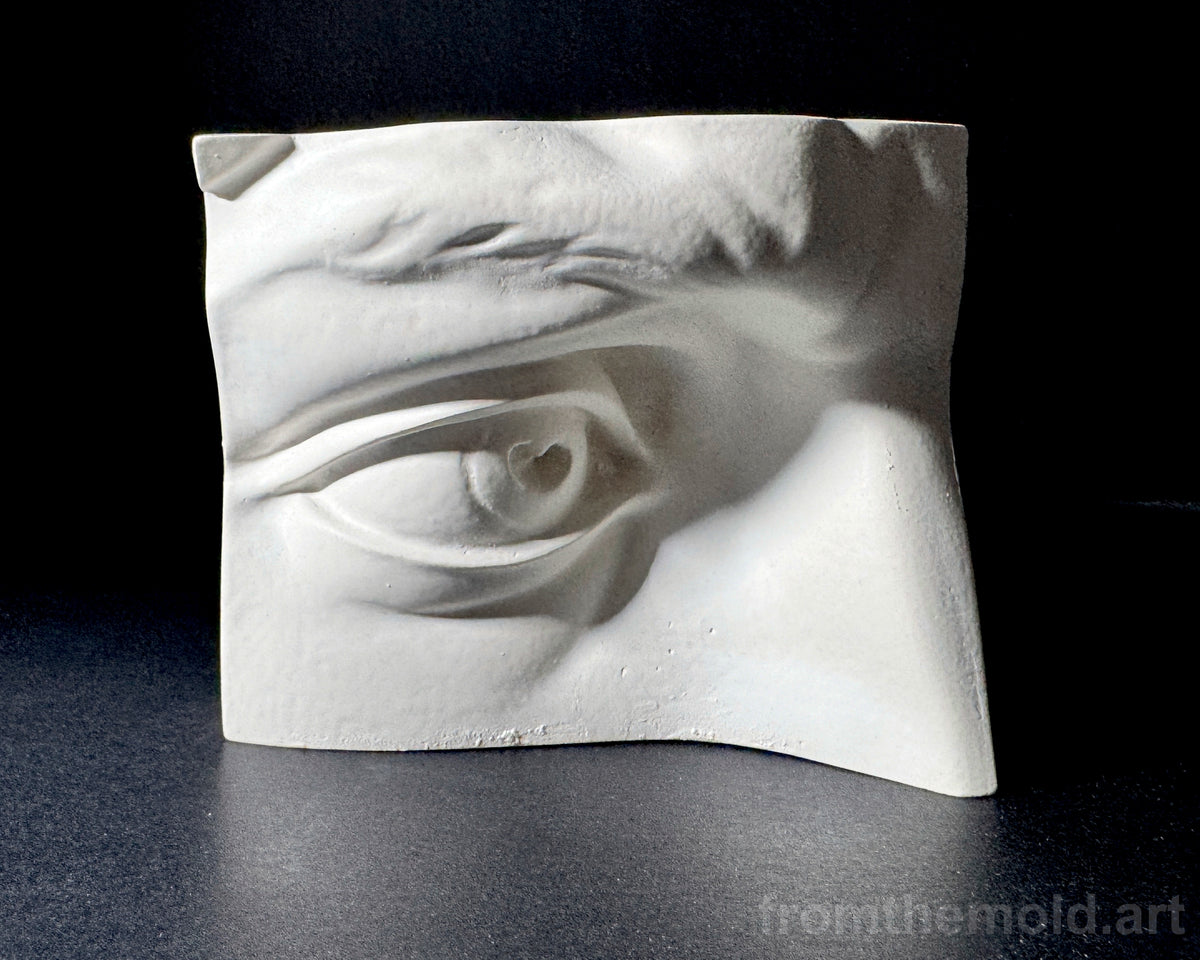
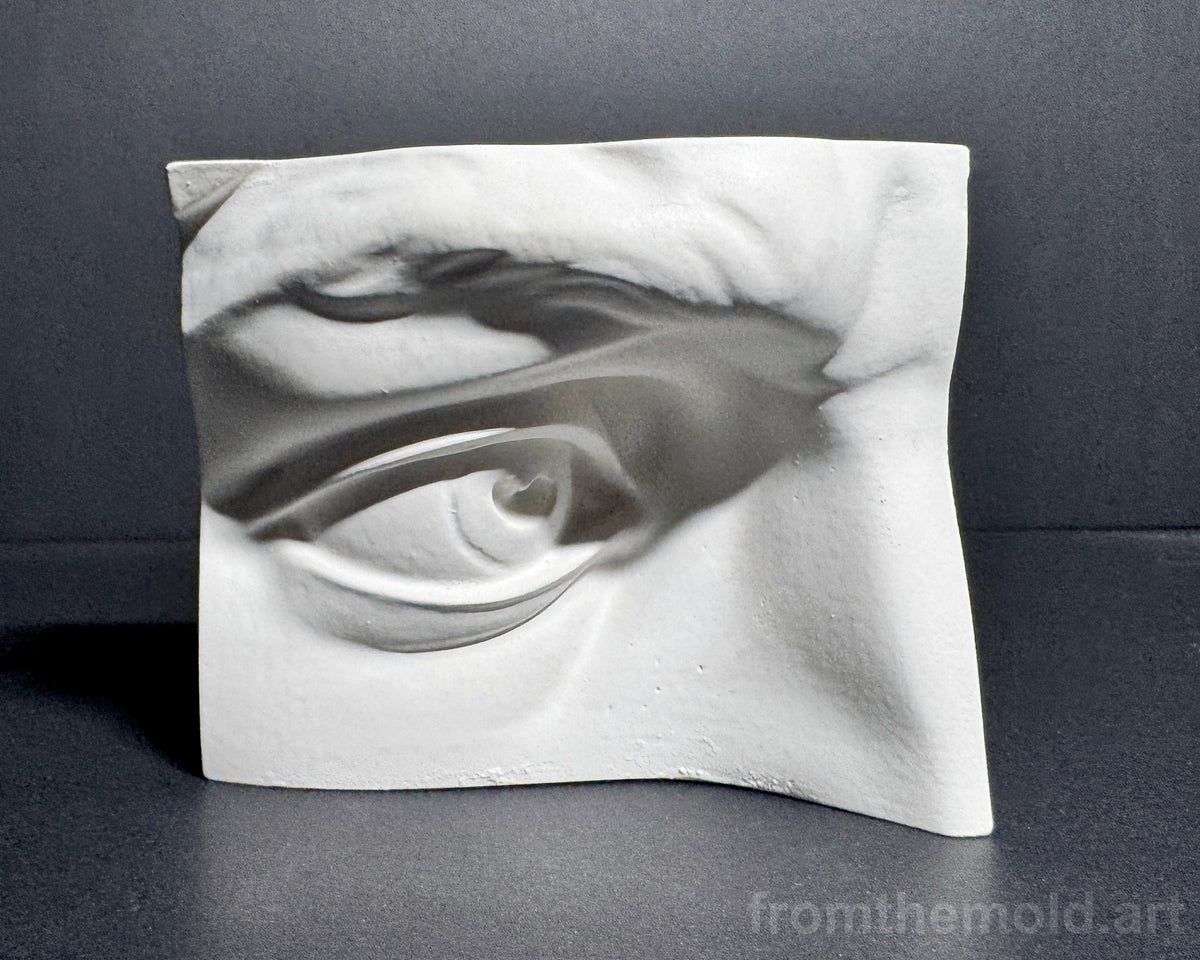
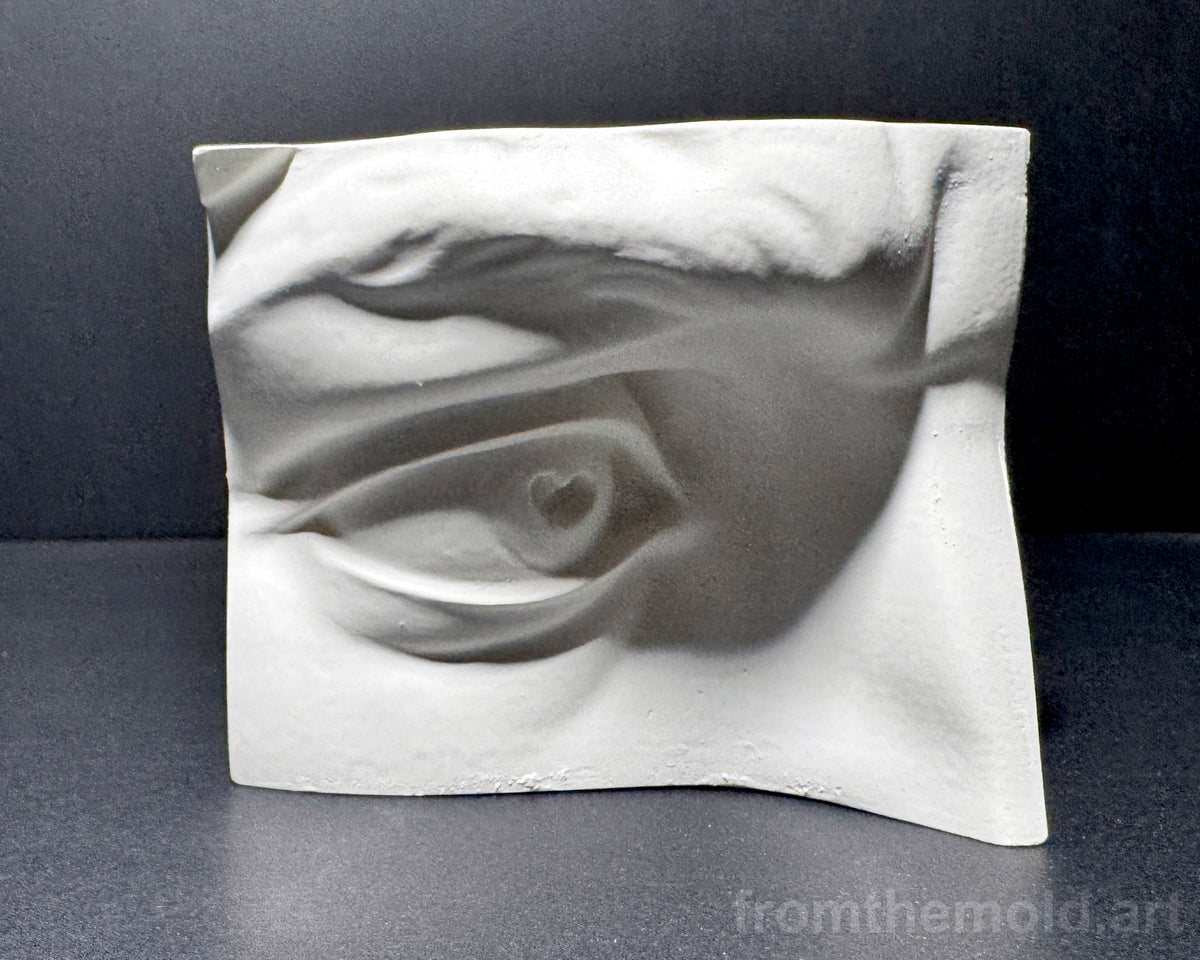
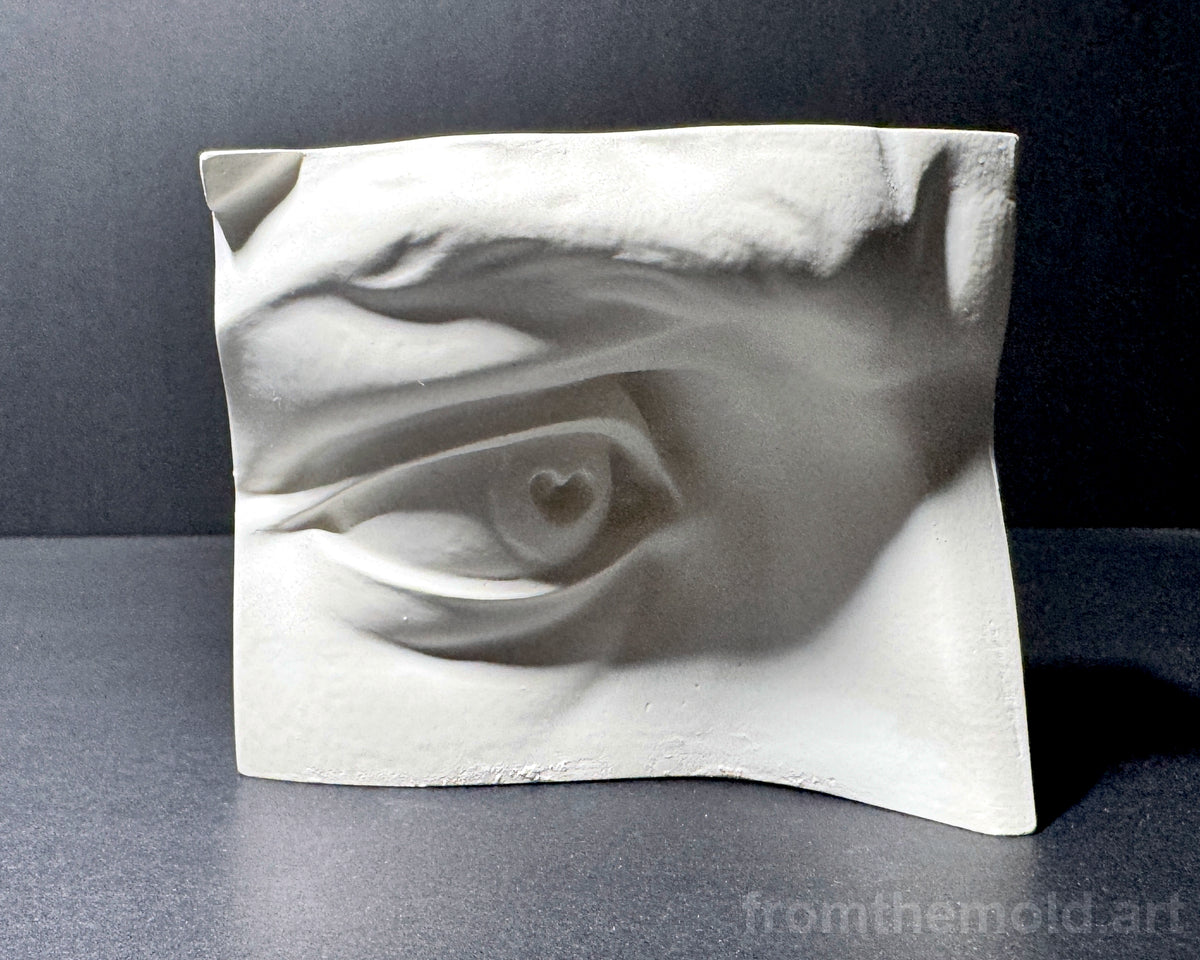
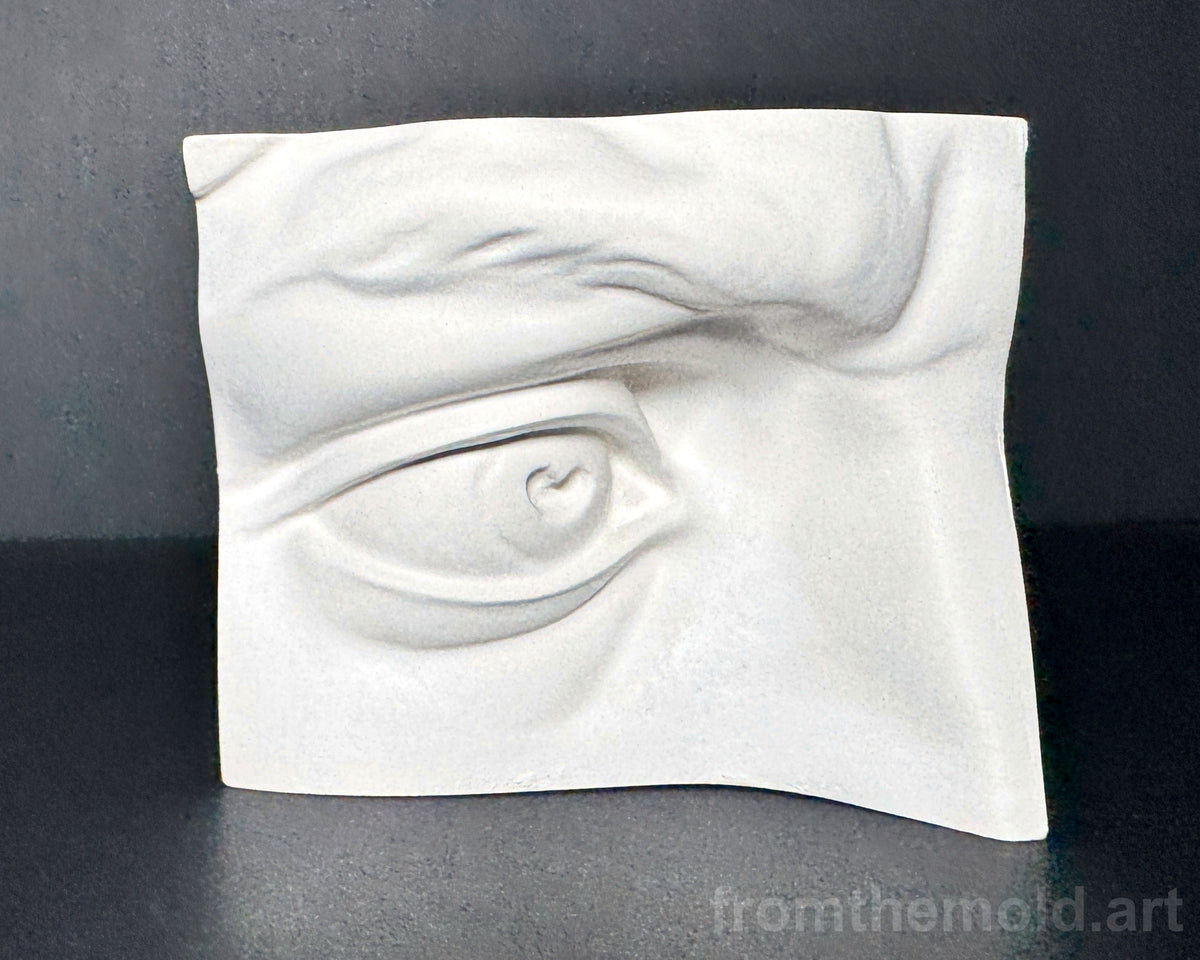
Eye of David Plaster Study Cast
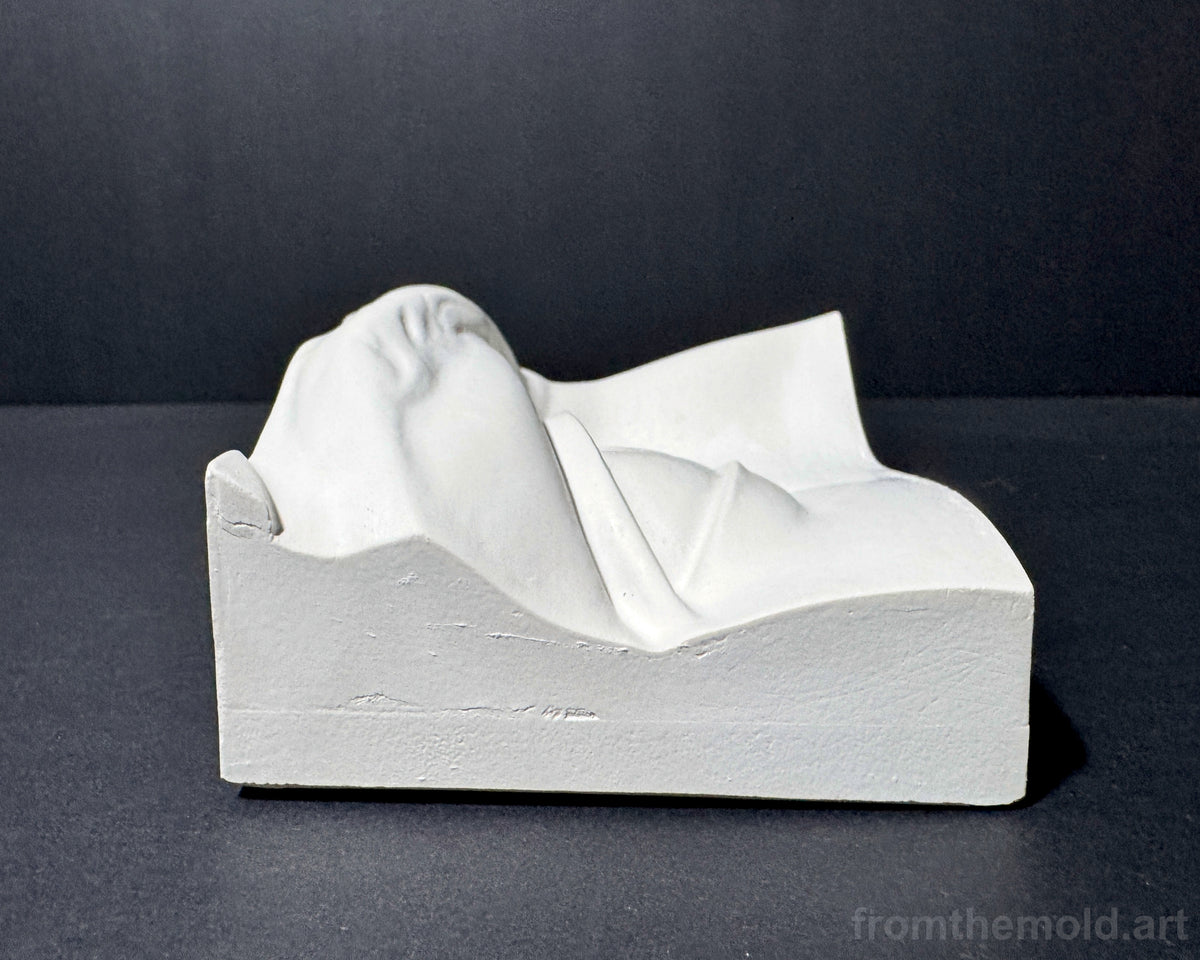
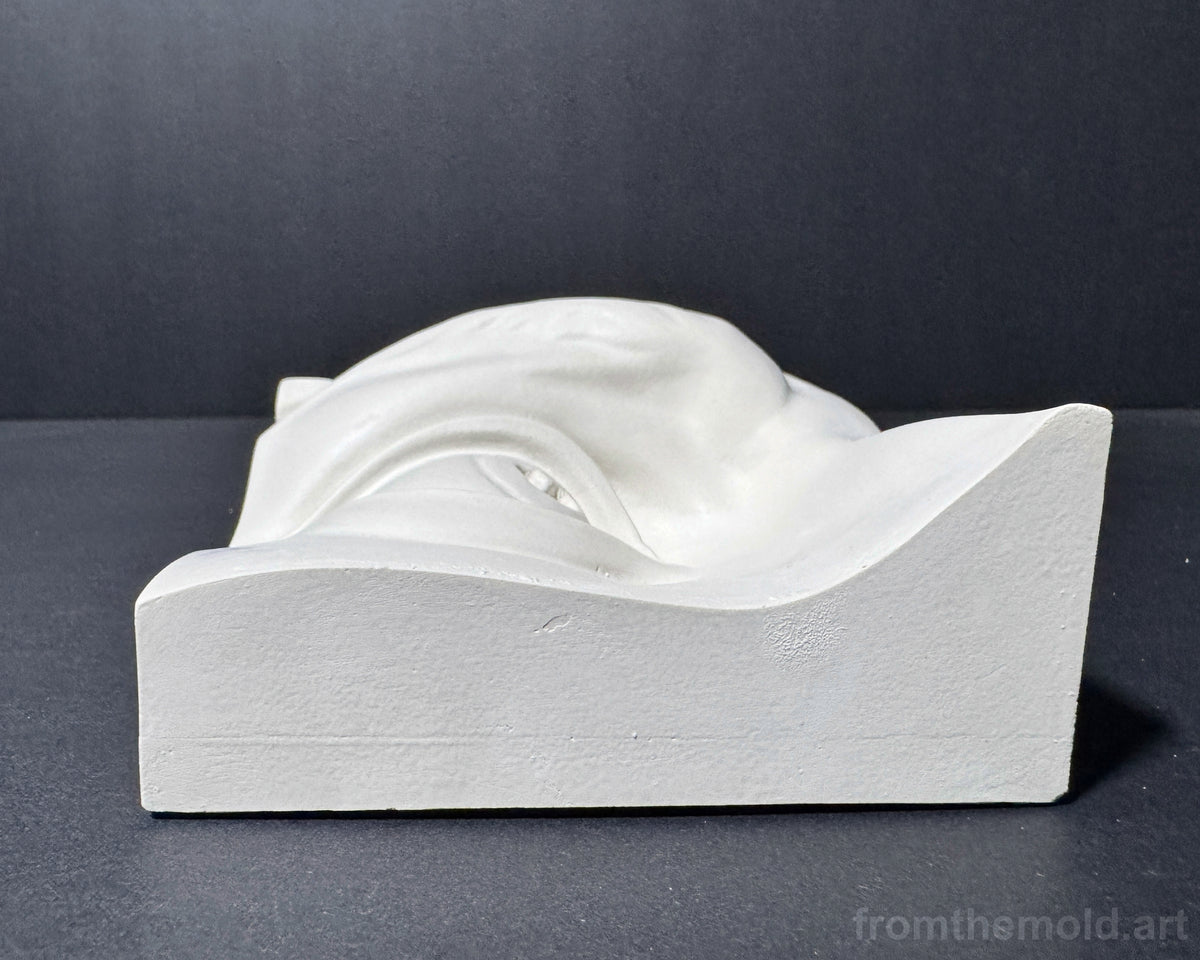
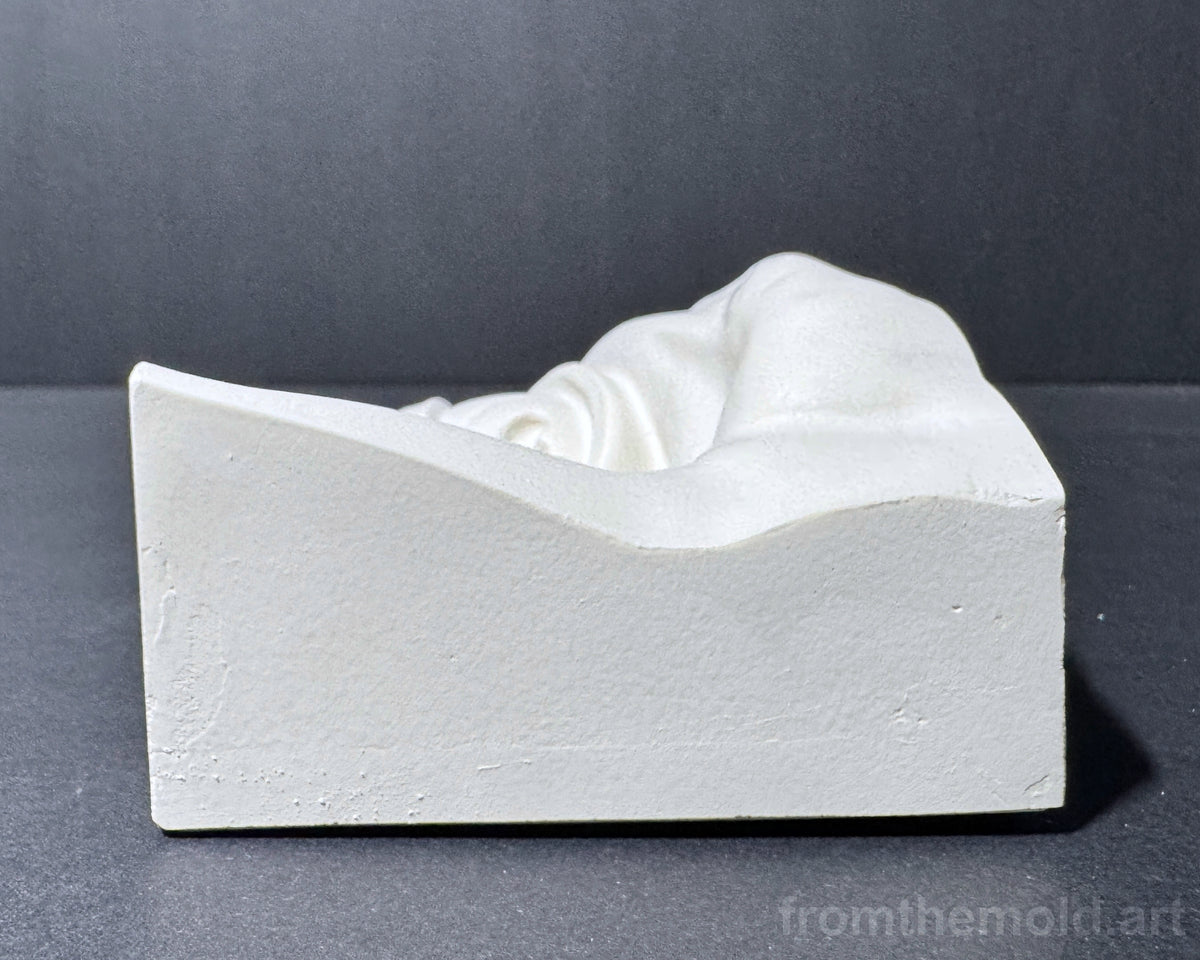
A handmade plaster study cast designed for artists practicing portrait drawing, facial anatomy, value, and three-dimensional form.
Focusing on a single feature allows you to slow down and examine the structures surrounding the eye without having to solve the entire portrait at once. The white plaster surface also removes variations in skin tone and color, making the relationships between light, shadow, and form easier to study.
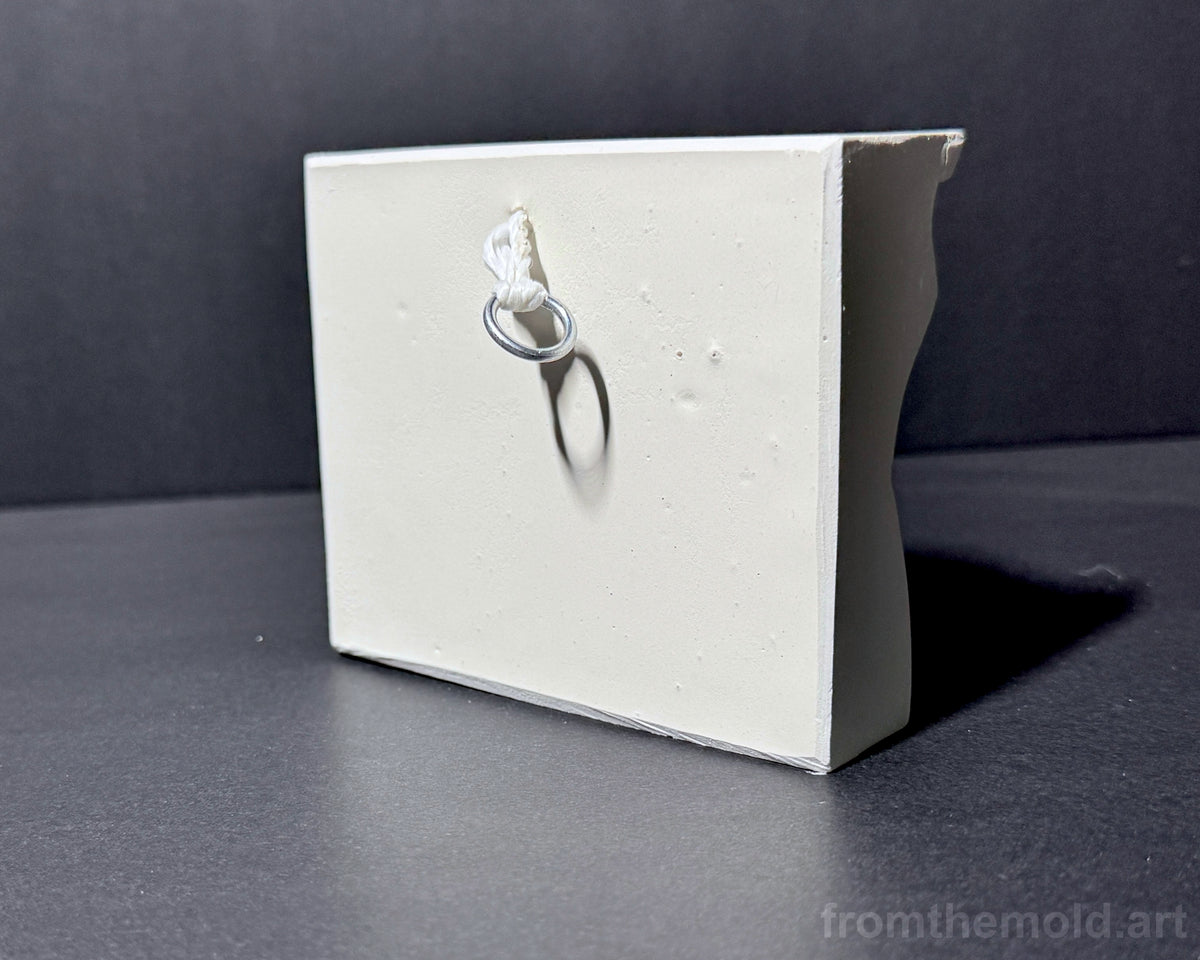
At approximately 3.5 by 4 inches, this compact cast can be used at a desk, easel, or classroom station and includes a loop on the back for hanging.
Why Artists Study the Eye
The eye is one of the most important landmarks in portrait drawing, but much of its structure comes from the forms surrounding it.
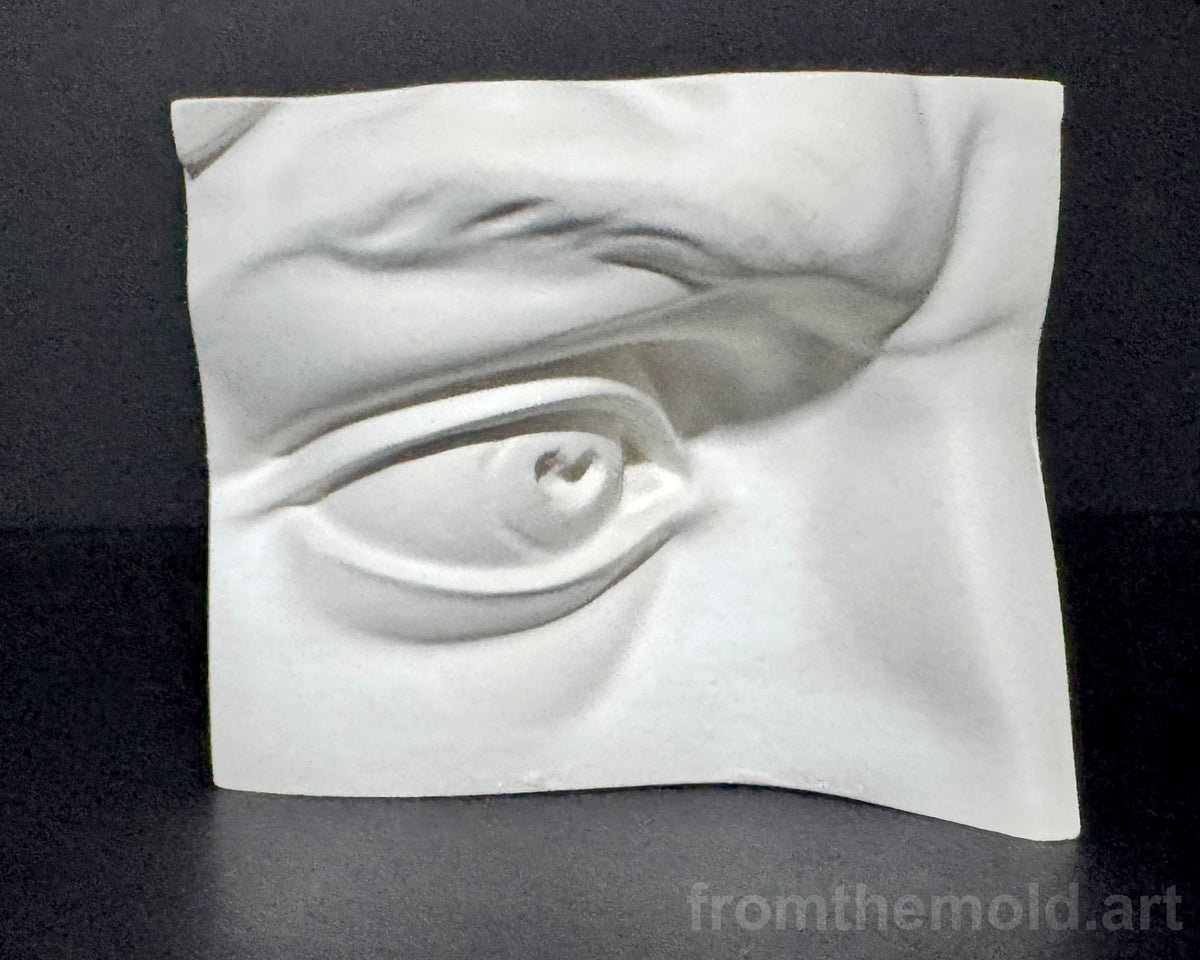
The brow, eye socket, upper and lower eyelids, and neighboring facial planes all contribute to the way the eye appears in three dimensions.
Studying the Eye of David as a plaster cast encourages you to think about these connected forms rather than reducing the eye to a simple outline.
What You Can Practice
• Structure of the eye and surrounding forms
• Brow and eyelid relationships
• Understanding the eye socket
• Proportion and measurement
• Major and minor plane changes
• Light and shadow relationships
• Value control and rendering
• Observational drawing techniques
Study Suggestions
Start by looking past the smaller details of the eye.
Identify the larger shape of the eye socket and the direction of the brow before placing the eyelids. Look for the way the upper lid overlaps the eyeball and how the surrounding forms transition into the nose and cheek.
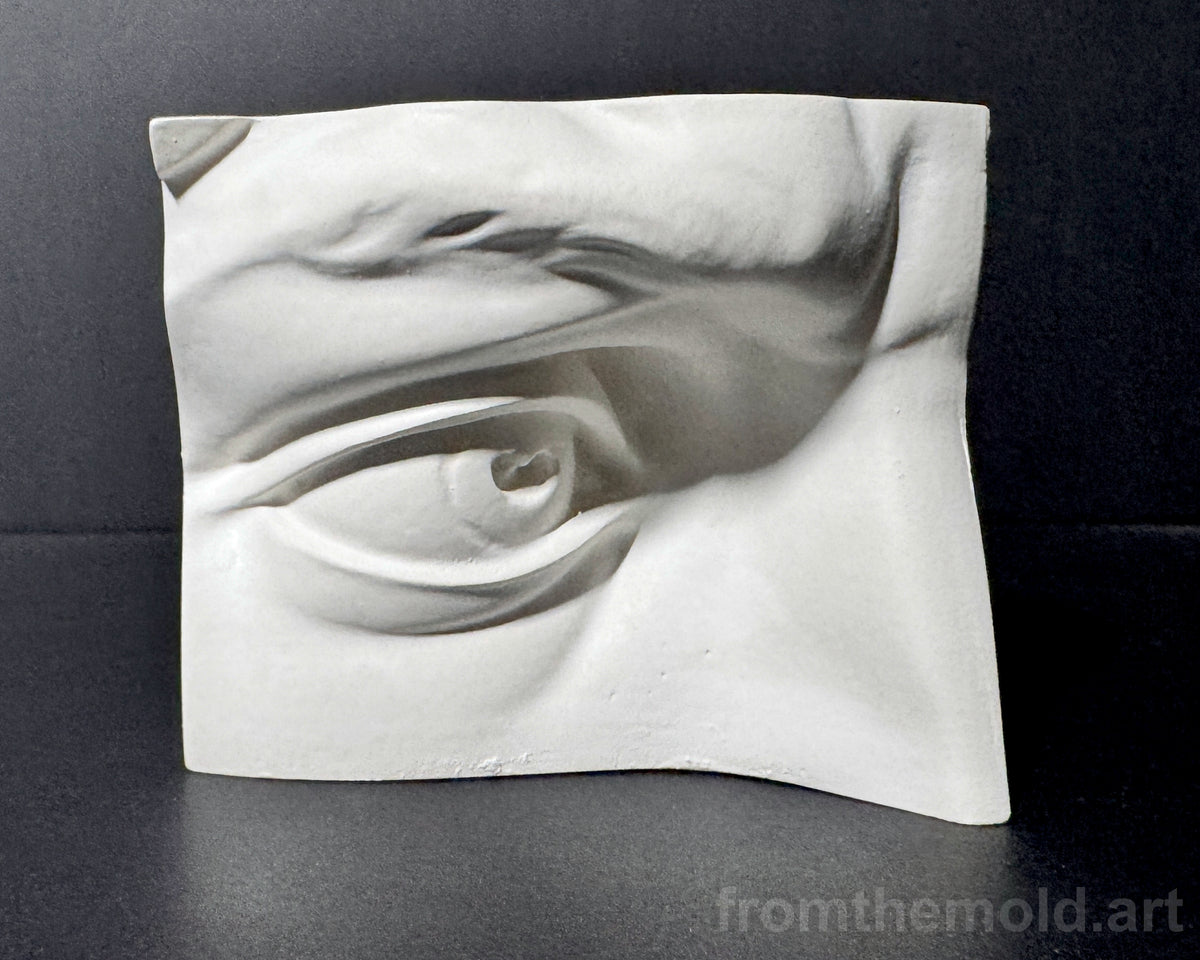
For a value study, place the cast under a single directional light and divide the subject into a simple light family and shadow family before developing smaller transitions.
Try repeating the drawing with the light coming from different directions. This can help build a stronger understanding of the form rather than memorizing one particular shadow pattern.
Why Plaster?
Plaster has long been used for artistic training because its matte white surface minimizes the distraction of local color.
Under controlled lighting, subtle plane changes, cast shadows, reflected light, and transitions across the form become easier to observe.
This makes the Eye of David useful not only for anatomy practice, but also for studying how light describes facial structure.
Best For
• Portrait drawing
• Facial anatomy study
• Cast drawing
• Eye studies
• Light and shadow exercises
• Value studies
• Art students
• Atelier training
• Art classrooms
Product Details
Material: White plaster
Finish: Natural white plaster
Approximate Dimensions:
• 3.5 in × 4 in
• 8.9 cm × 10.2 cm
Features:
• Handmade plaster construction
• Integrated hanging loop on the back
• Suitable for tabletop or wall-mounted study
• Compact size for individual or classroom practice
What's Included
• One handmade Eye of David Plaster Study Cast
Handmade in the Studio
Each Eye of David is individually cast and finished by hand.
Each cast is made and finished by hand. Small air bubbles may occasionally be present on the rear or base of the cast as part of the casting process, but the primary study surface is kept clean for drawing and observation.
For Educators
The Eye of David provides a focused classroom reference for teaching portrait structure, facial anatomy, value, observation, and the relationship between light and three-dimensional form.
Its compact size makes it practical for individual study stations, demonstrations, atelier programs, and classroom drawing exercises.
For multiple casts or classroom orders, contact From the Mold regarding quantity purchasing options for educational programs.