From the Mold
Bearded Mouth & Nose Plaster Study Cast – Facial Form, Drawing & Light Study
Bearded Mouth & Nose Plaster Study Cast – Facial Form, Drawing & Light Study
Couldn't load pickup availability
Bearded Mouth & Nose Plaster Study Cast
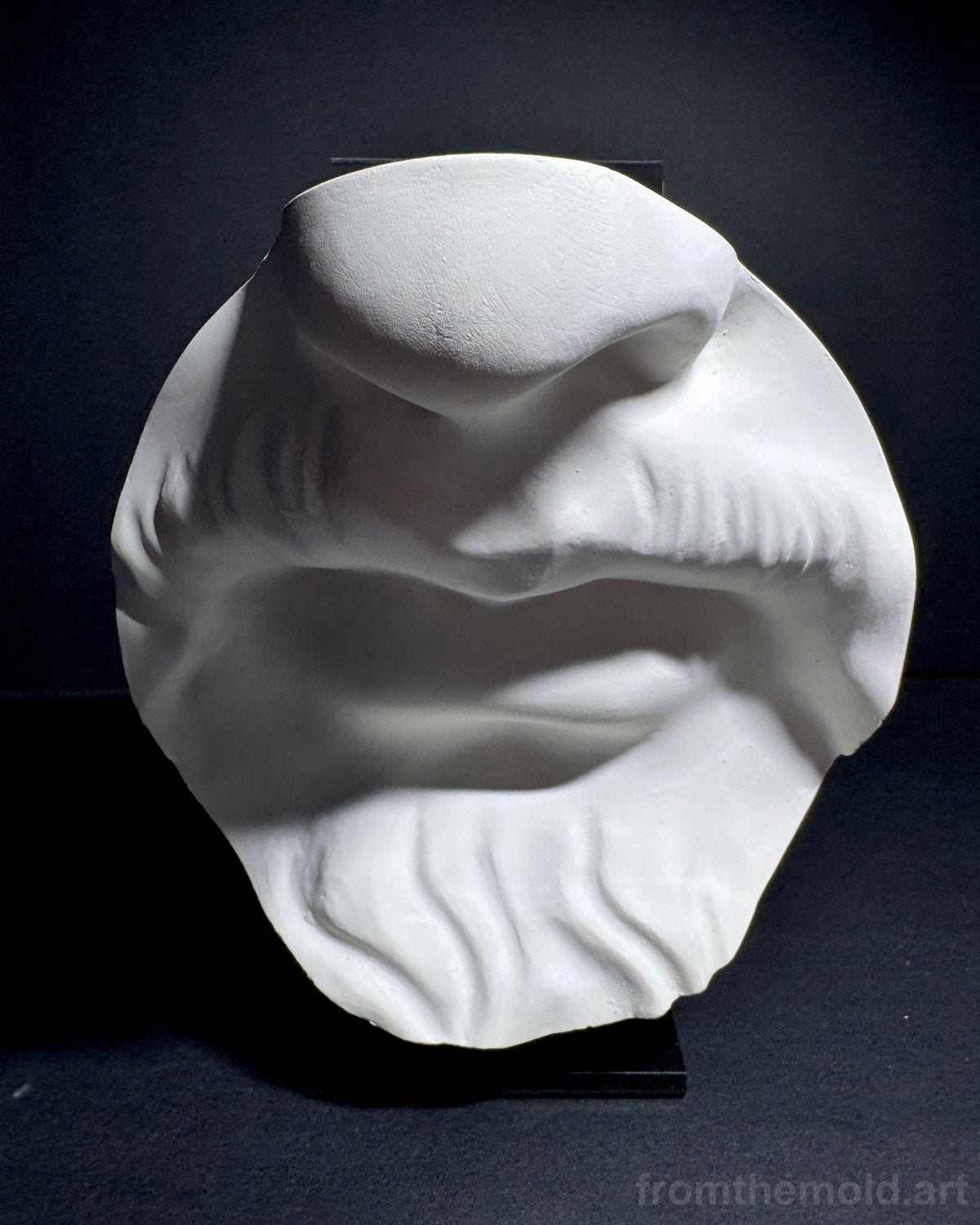
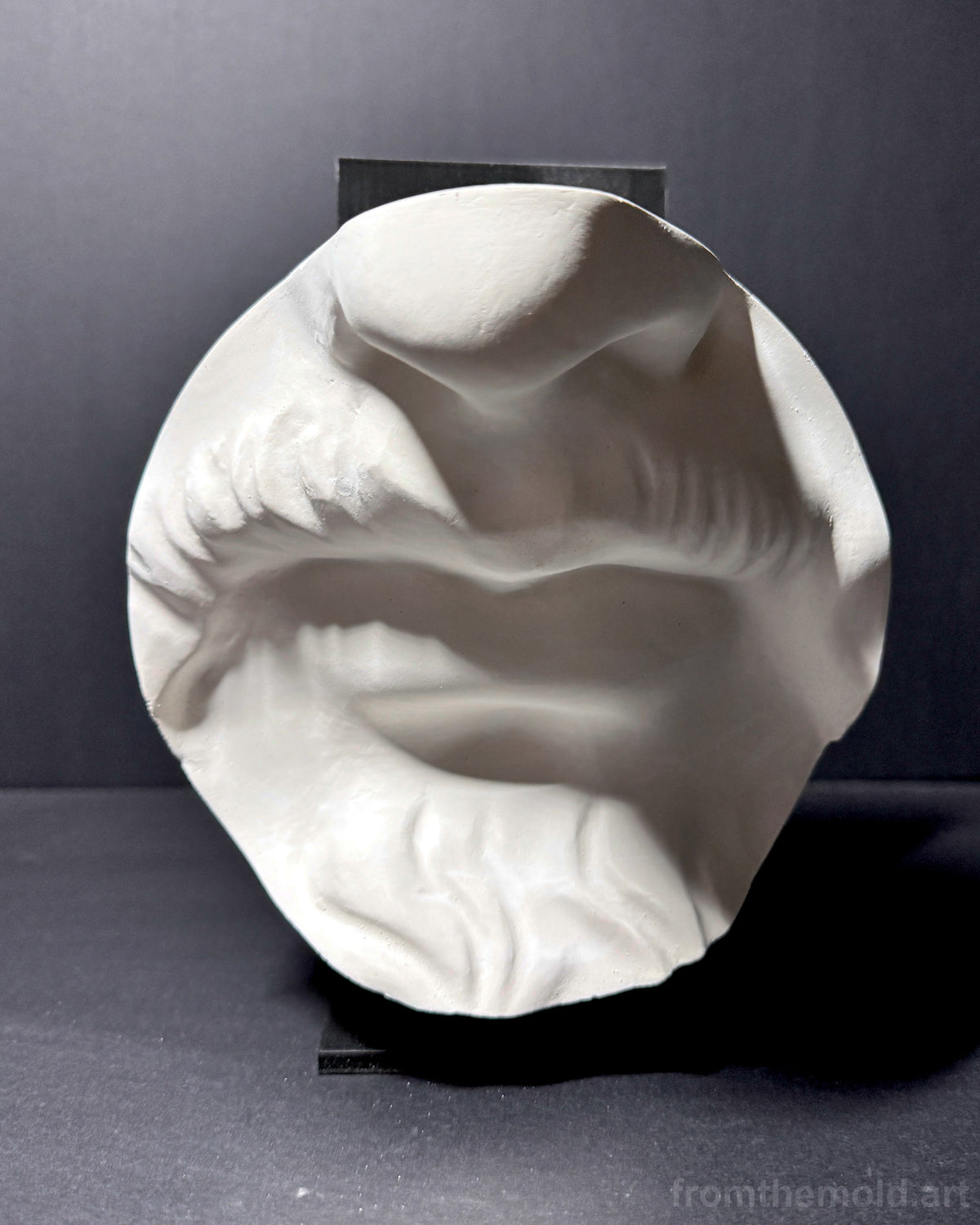
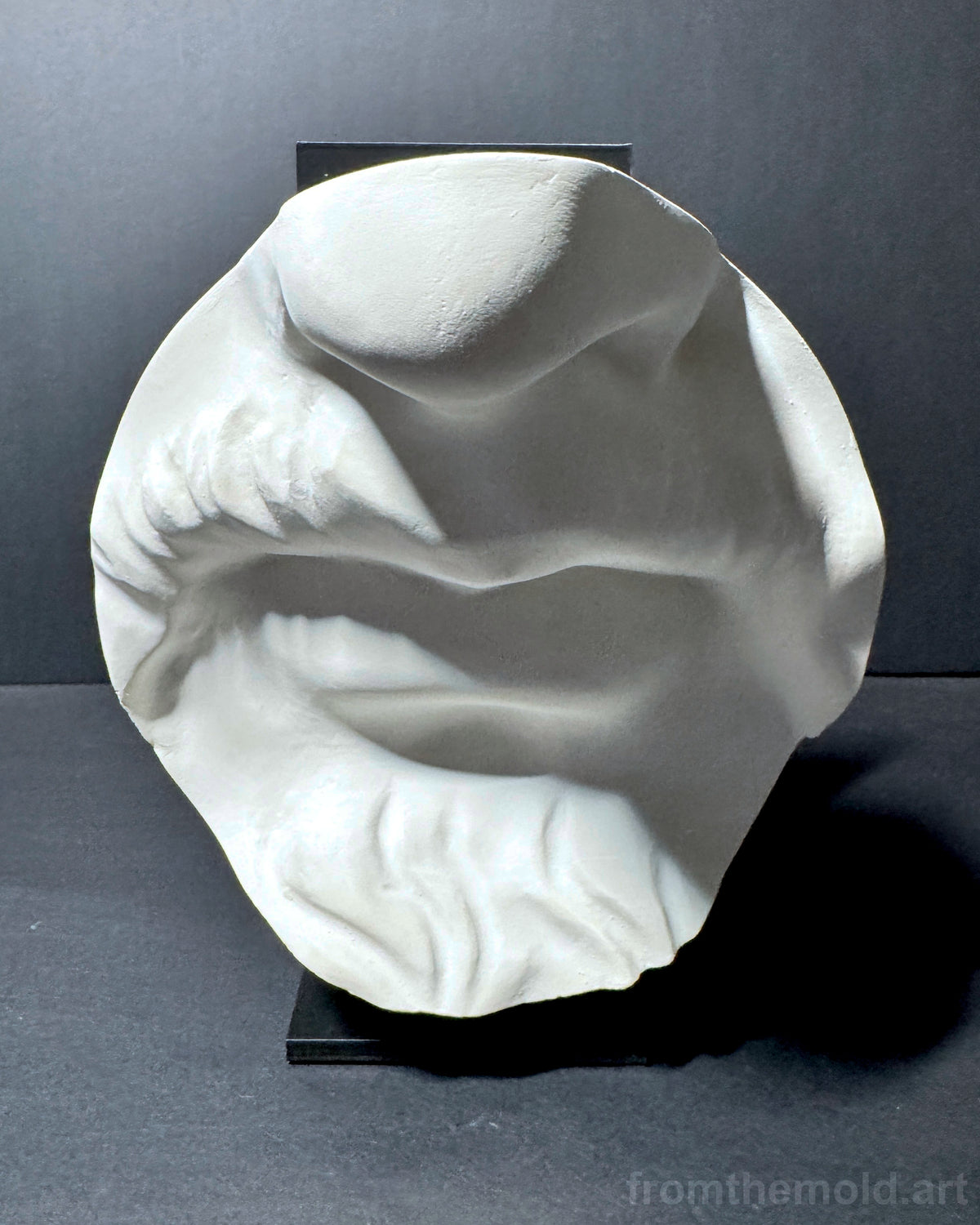
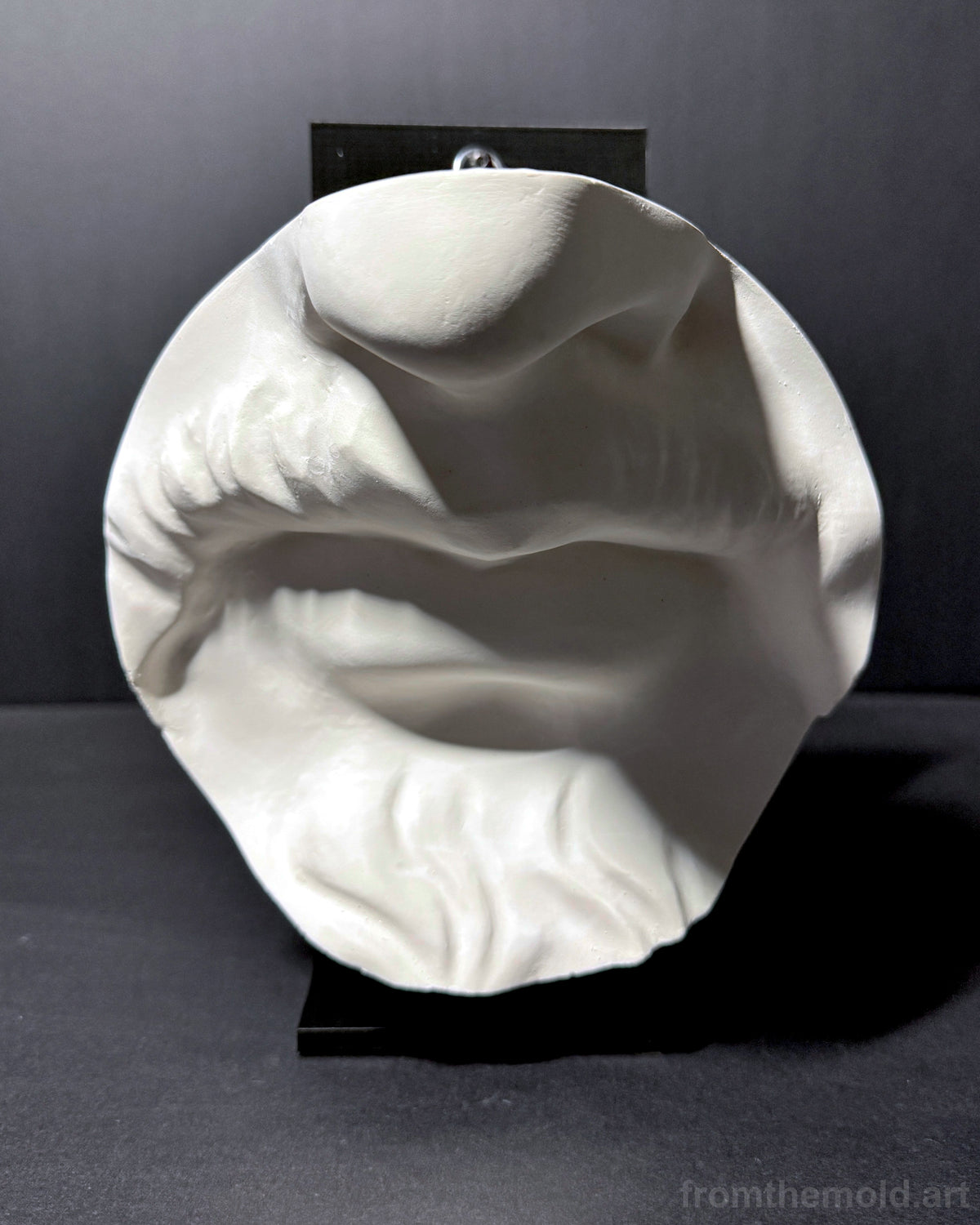
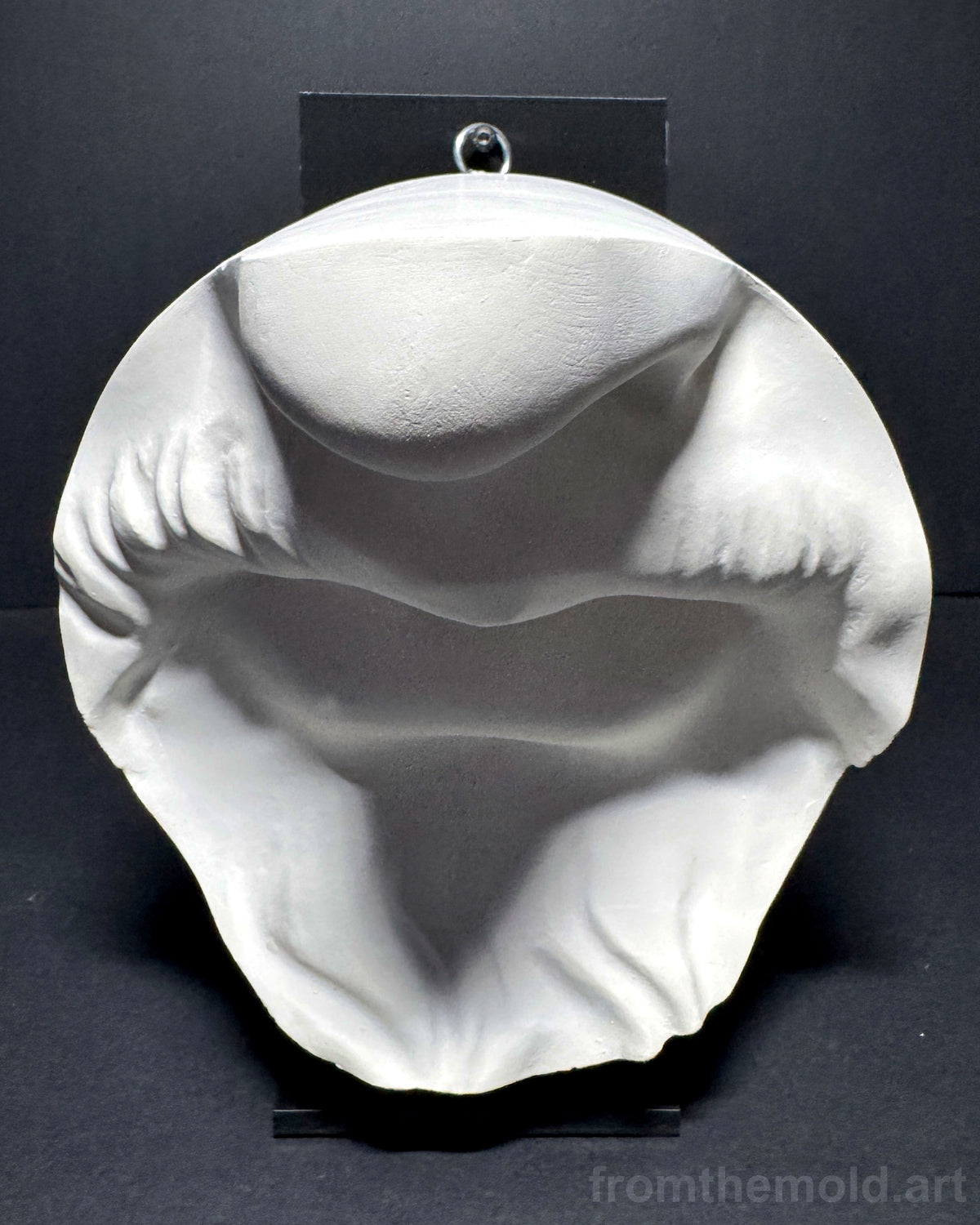
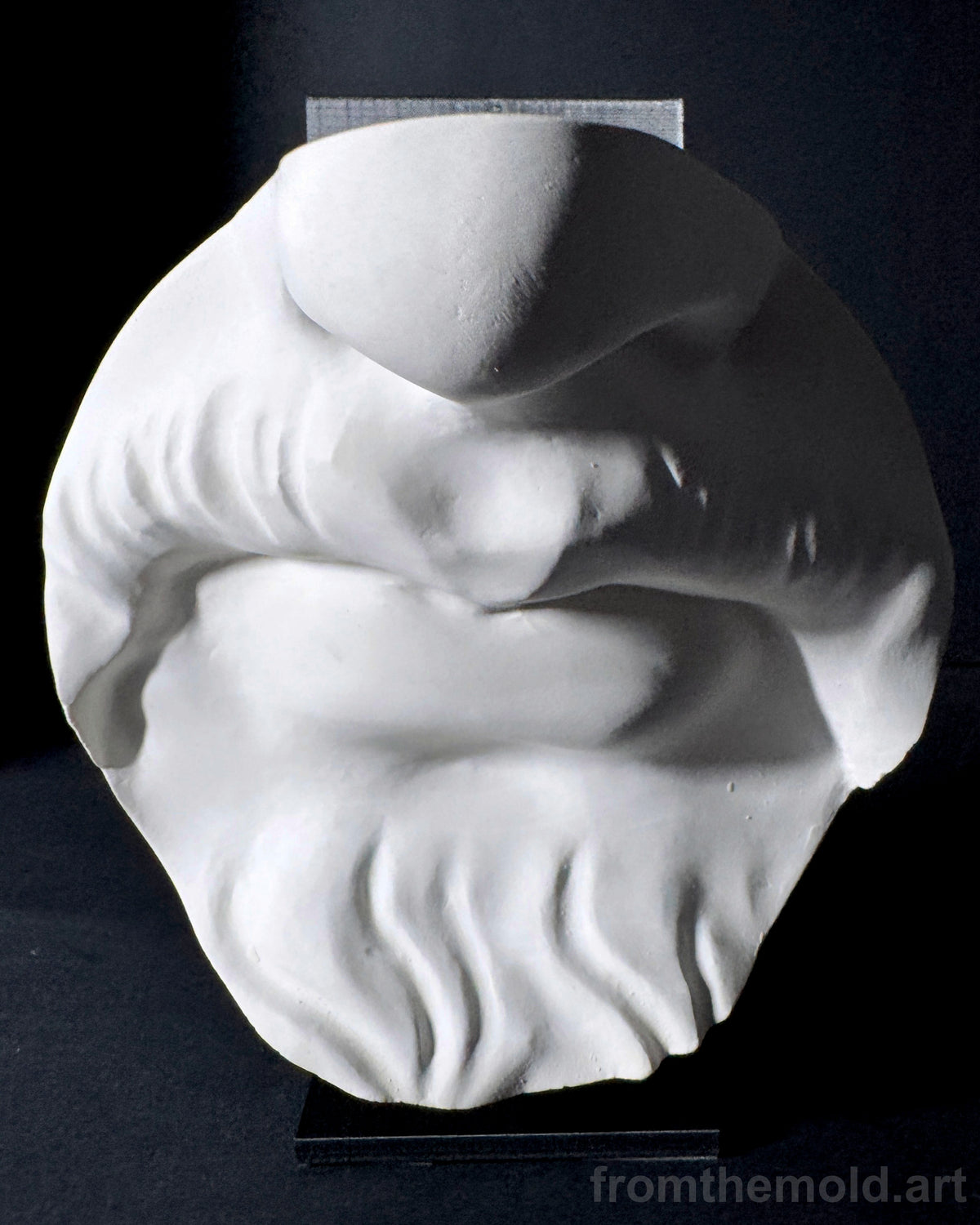
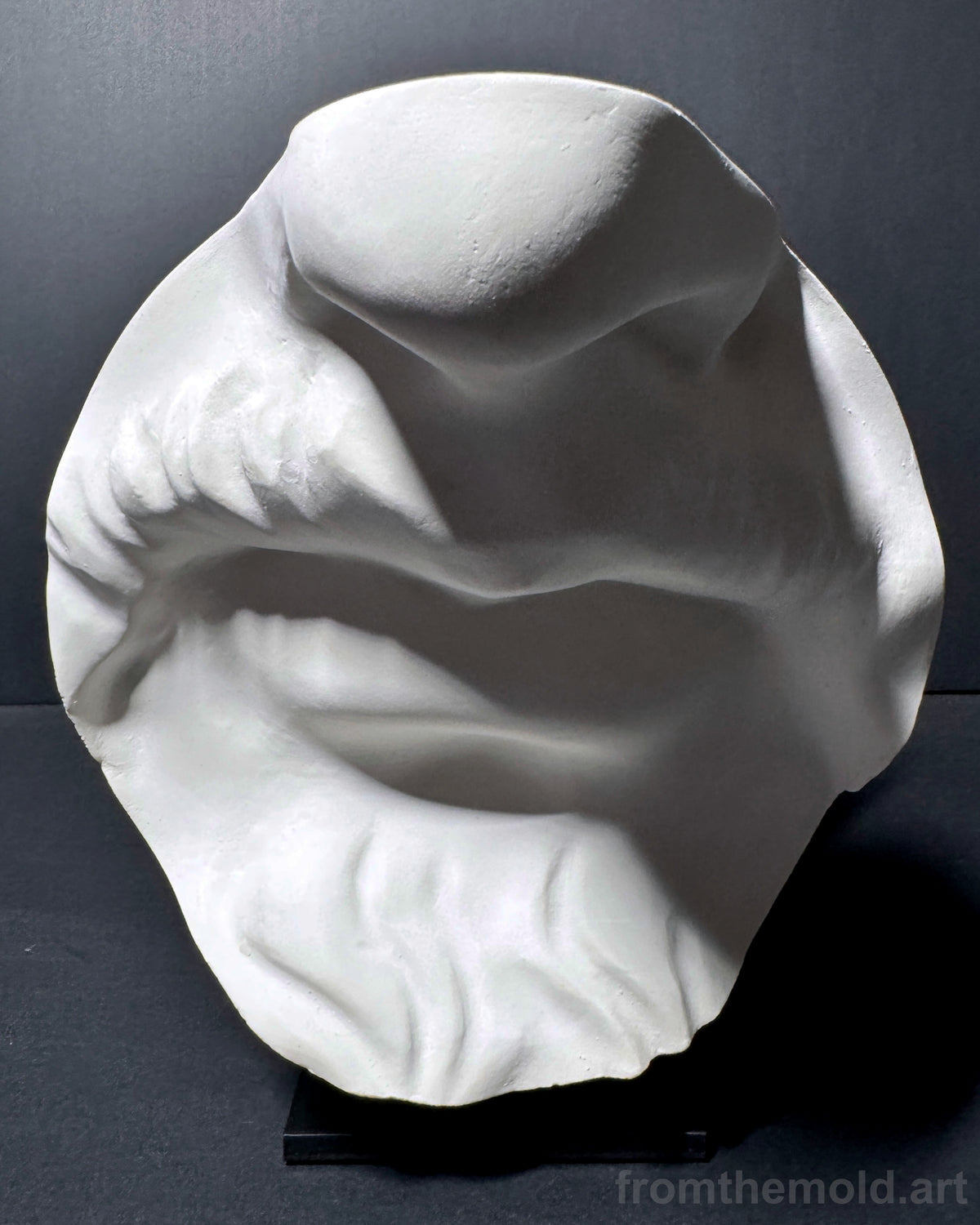
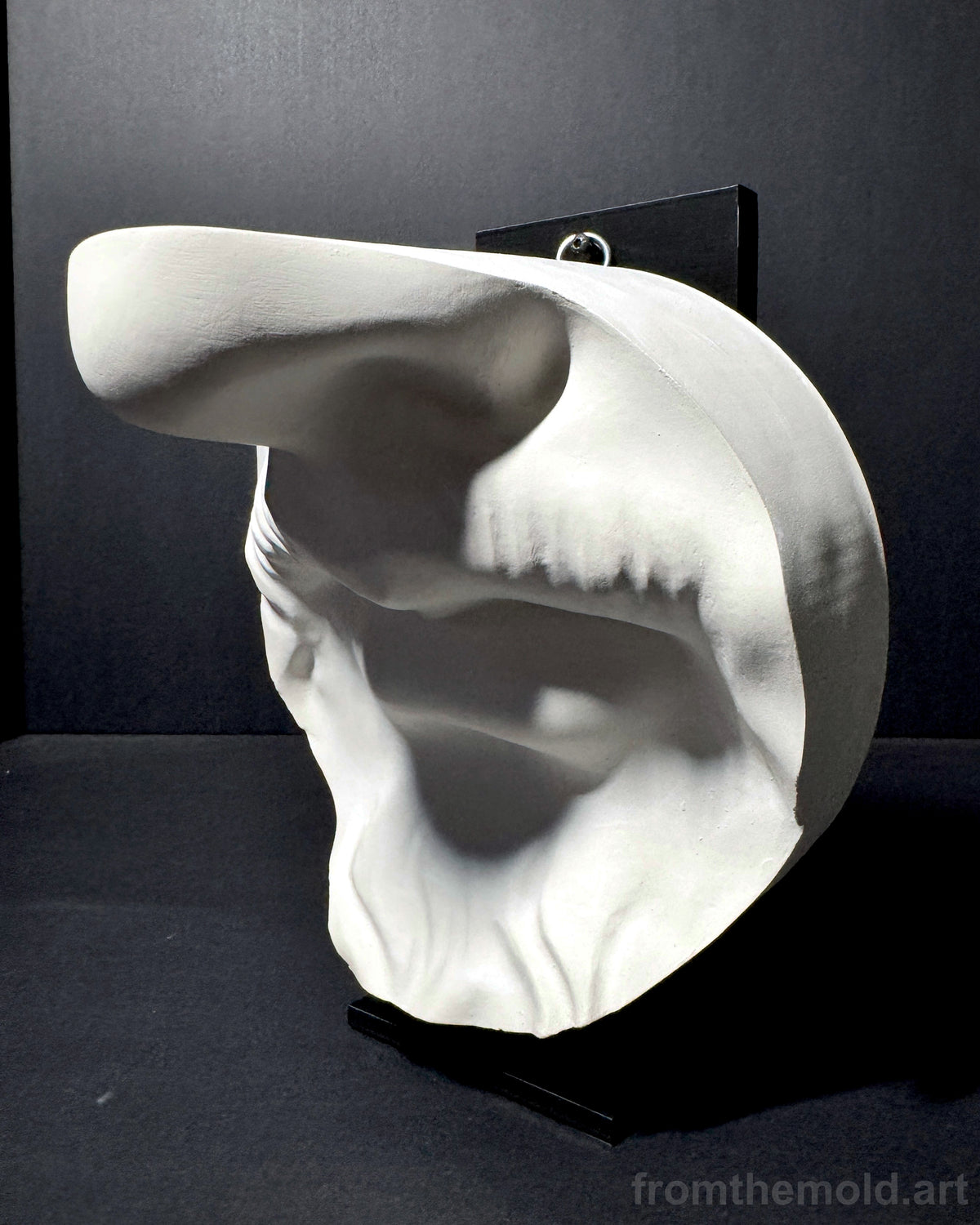
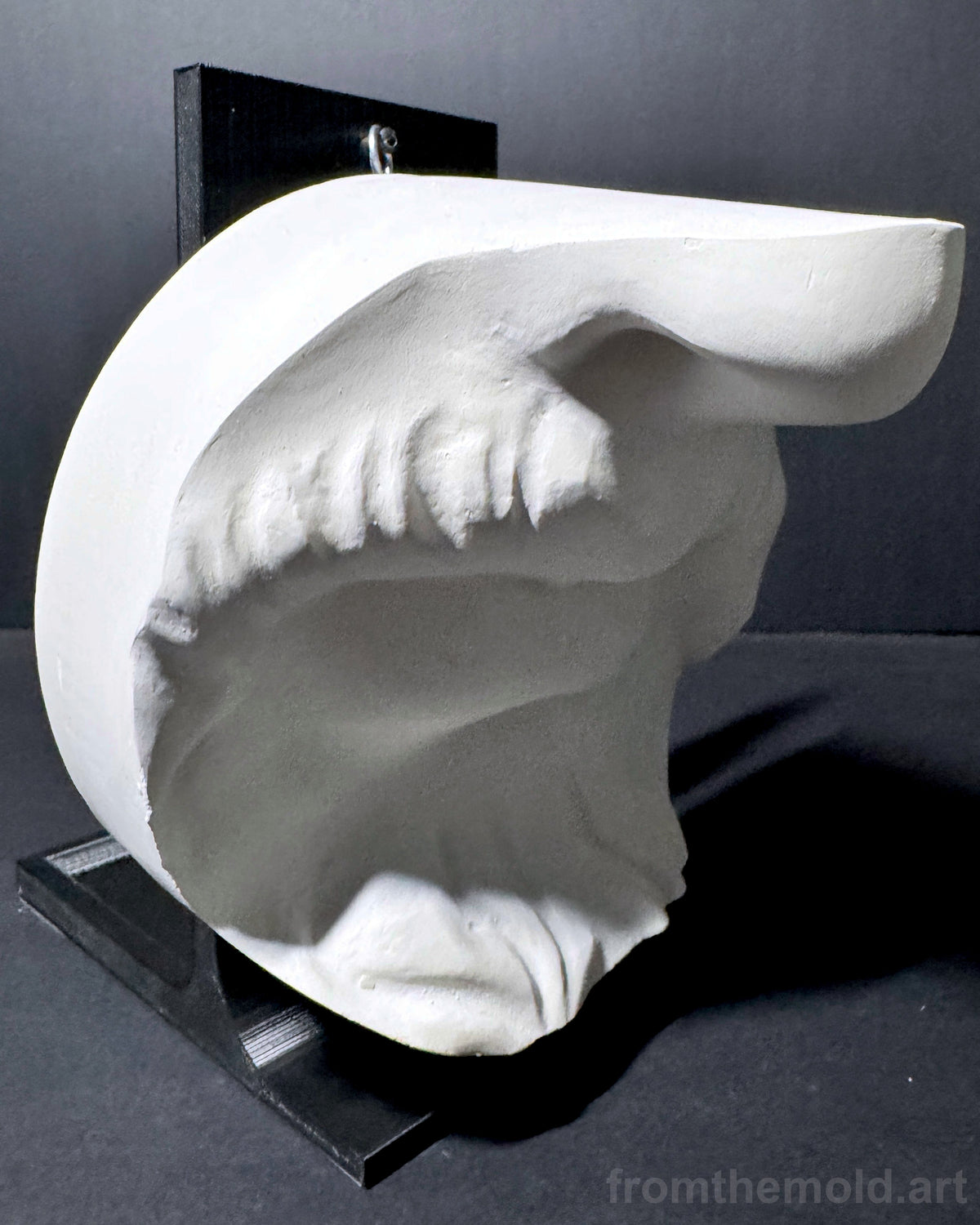
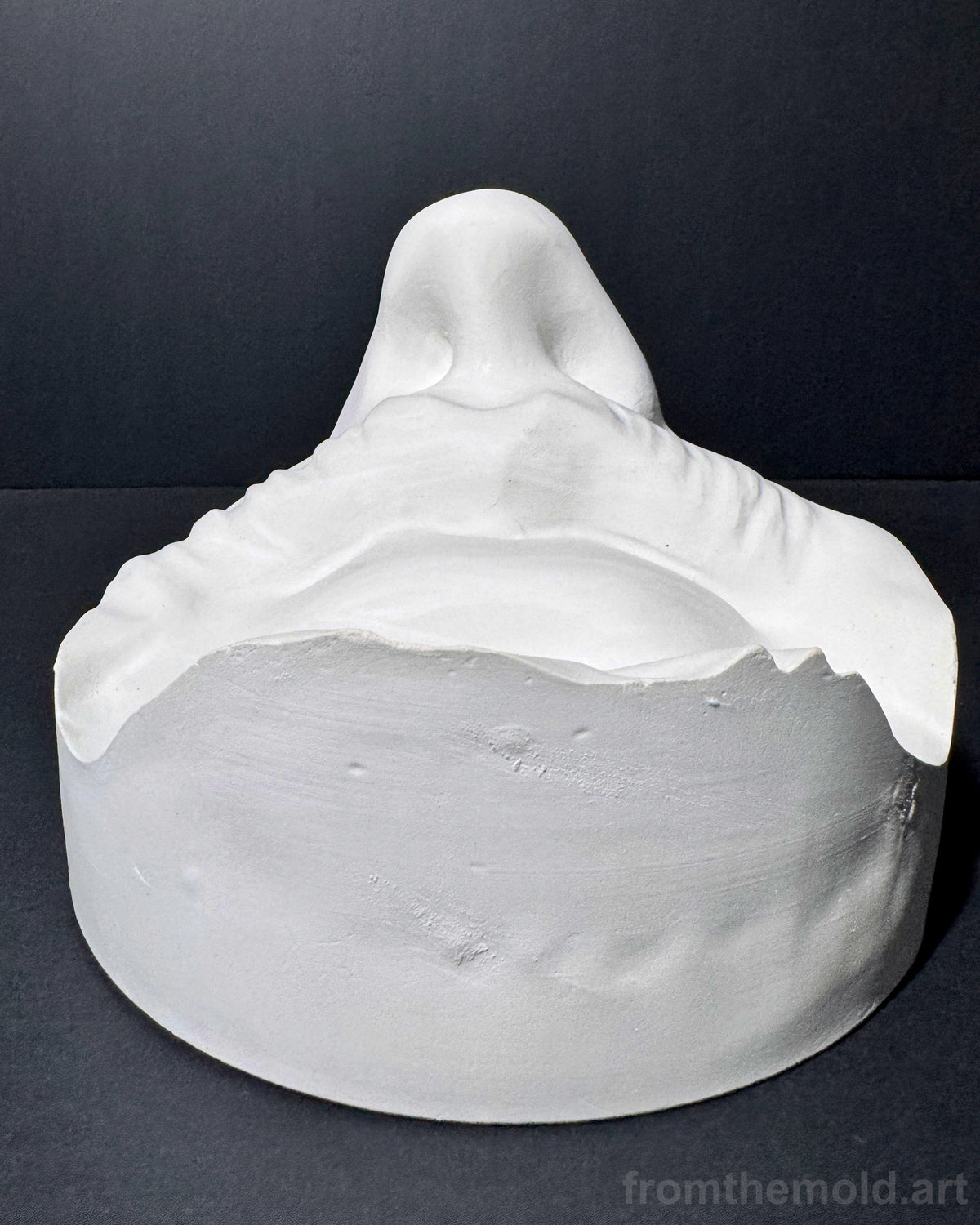
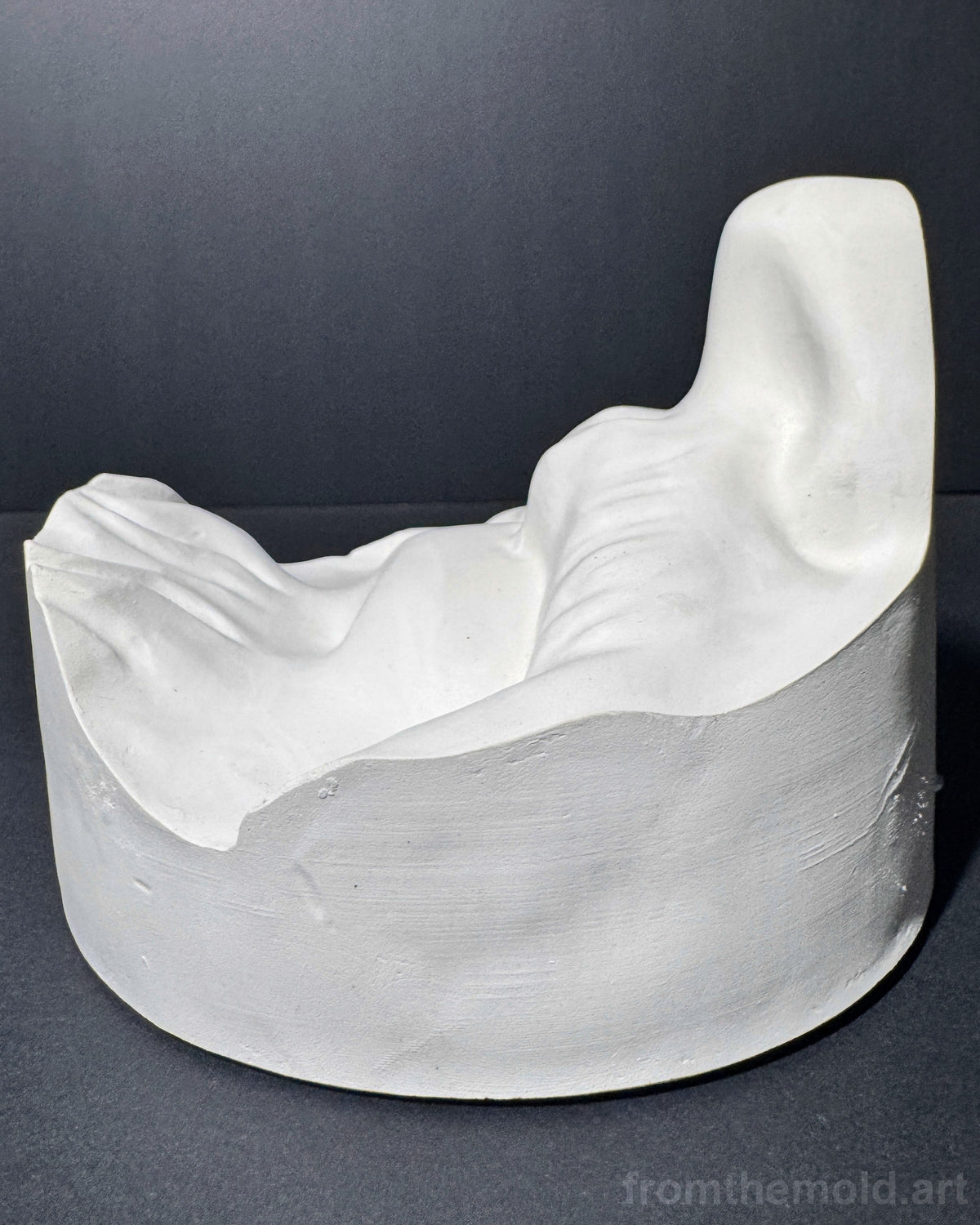
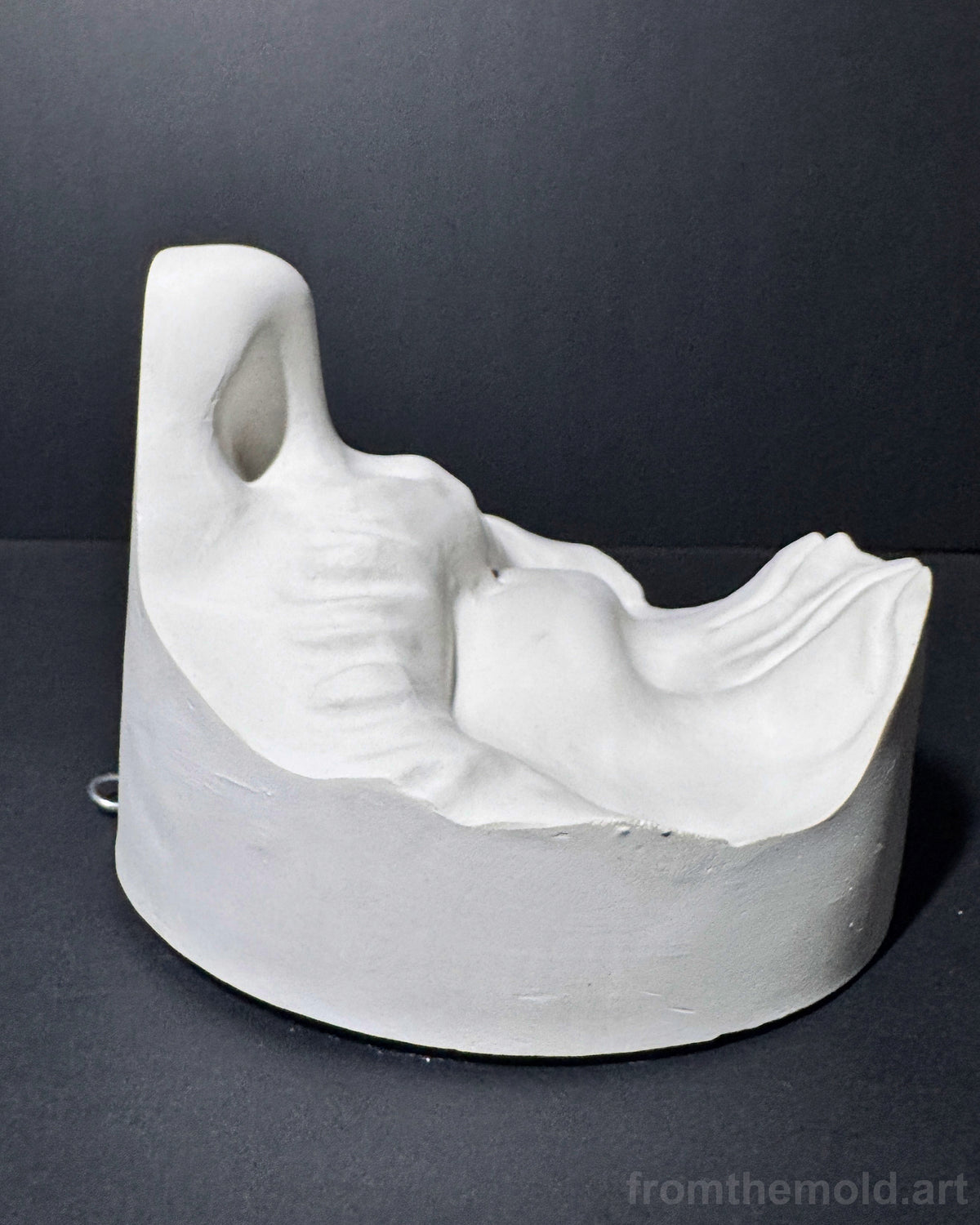
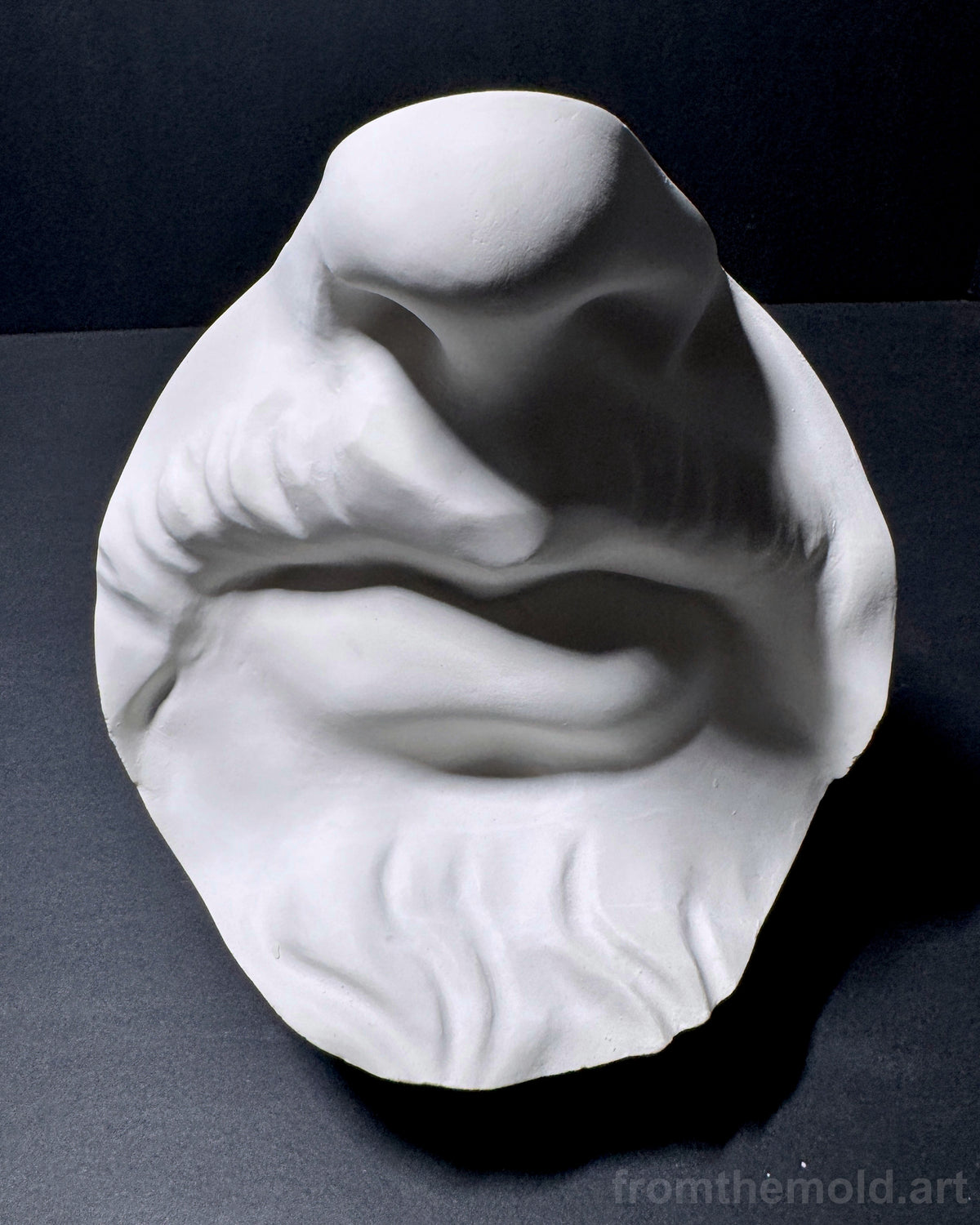
A handmade plaster study cast featuring the lower portion of a bearded face, including the underside of the nose, moustache, lips, and part of the beard.
The combination of projecting anatomy, recessed forms, facial hair, and strong cast shadows makes this a more complex study than an isolated nose or mouth.
At approximately 6.3 inches wide, it provides a substantial but manageable reference for portrait drawing, anatomy, value, and light studies.
Why Artists Study This Cast
Facial features are easiest to understand when they are studied as connected forms rather than isolated shapes.
The underside of the nose transitions into the philtrum, moustache, upper lip, mouth, and lower facial structure. Each of these forms affects the next and changes the way light moves across the face.
The added moustache and beard introduce another level of complexity. Rather than simply following individual hairs, the artist can study the larger masses and shadow shapes created by the facial hair.
What You Can Practice
• Relationship between the nose and mouth
• Cast shadows beneath the nose
• Structure of the upper and lower lips
• Moustache and beard masses
• Facial anatomy and connected forms
• Major and minor plane changes
• Light and shadow relationships
• Value control and rendering
• Proportion and measurement
• Observational drawing
Study Suggestions
Begin by ignoring the moustache and beard details and look for the largest underlying facial forms.
Establish the projection of the nose, the position of the mouth, and the larger mass of the lower face first.
Then place the cast under a single directional light and identify the major shadow created beneath the nose. Follow that shadow through the moustache and upper lip before moving into smaller value changes.
When studying the beard, try grouping it into larger light and dark masses rather than drawing individual strands.
Changing the light direction can dramatically alter the appearance of this cast, making it useful for repeated value and shadow exercises.
Why Plaster?
Plaster has long been used for artistic training because its matte white surface minimizes local color and makes changes in form easier to see.
This cast is particularly effective under directional lighting because the projection of the nose, recessed mouth area, and textured facial hair produce a wide range of cast shadows, form shadows, and reflected light.
Best For
• Portrait drawing
• Facial anatomy
• Mouth and nose studies
• Beard and moustache studies
• Cast drawing
• Light and shadow exercises
• Value studies
• Intermediate drawing practice
• Atelier training
• Art classrooms
Product Details
Material: White plaster
Finish: Natural white plaster
Approximate Dimensions:
• Width: 6.3 in (16 cm)
• Maximum Depth: 4.7 in (12 cm)
Features:
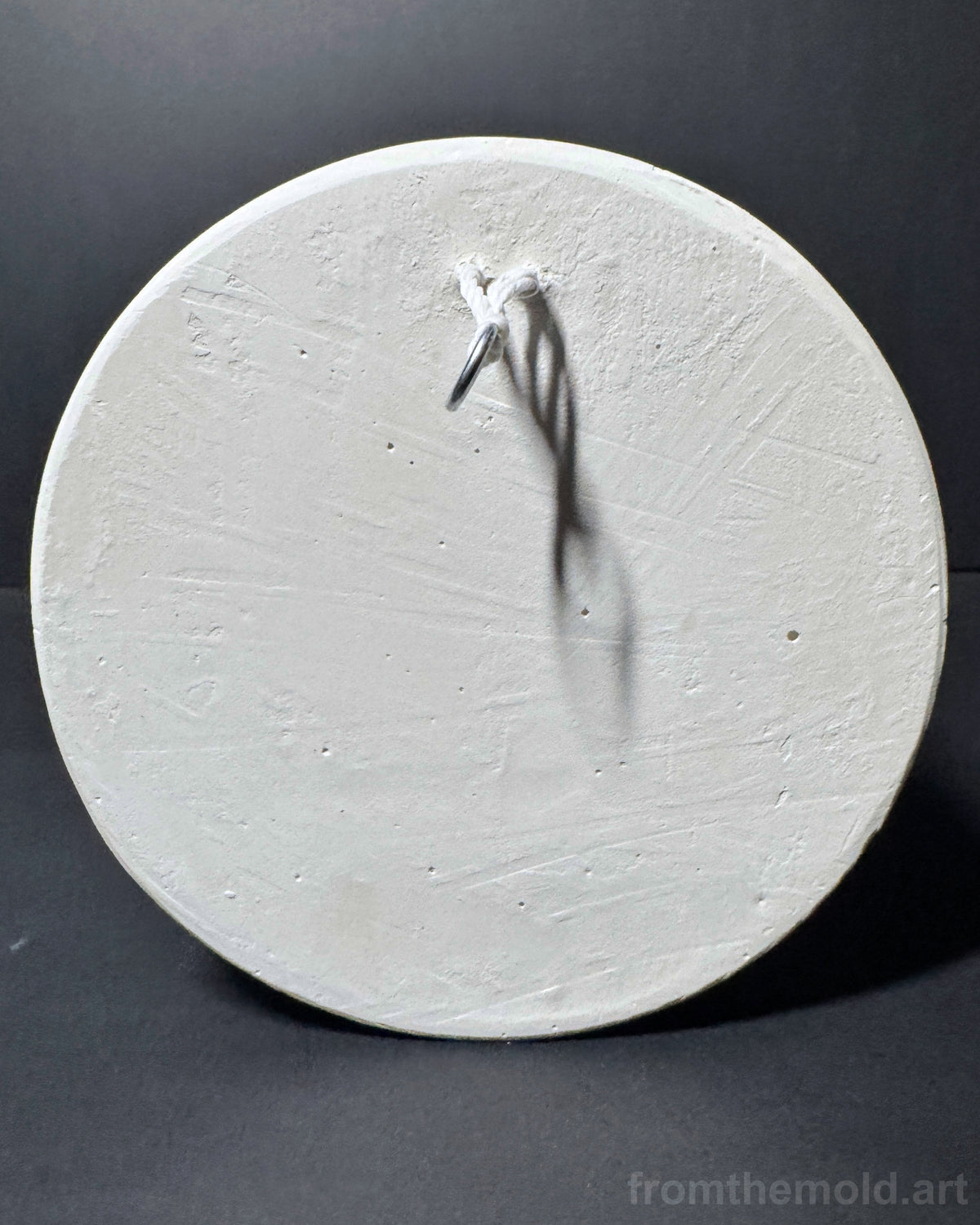
• Circular facial-fragment design
• Includes underside of nose, moustache, mouth, and beard
• Strong natural cast-shadow relationships
• Handmade plaster construction
• Designed as an artistic reference and training tool
What's Included
• One handmade Bearded Mouth & Nose Plaster Study Cast
Handmade in the Studio
Each cast is individually made and finished by hand.
Because plaster casting is a handmade process, minor variations may occur between pieces. These small differences are a natural part of producing each cast individually.
For Educators
This cast works well as a transition from simpler feature studies into more complex portrait problems.
Students can study facial anatomy, hair masses, overlapping forms, cast shadows, and value relationships within one compact subject.
For multiple casts or classroom orders, contact From the Mold regarding quantity purchasing options for educational programs.
Share